Purple viper-grass
Podospermum purpureum
Description
Purple viper-grass (Podospermum purpureum) is a perennial herbaceous plant belonging to the Asteraceae family. Known for its edible taproot, it shares several biological similarities with more common root vegetables like scorzonera. While it remains a niche crop, its resilience and nutritional value have garnered interest among researchers looking for alternative root crops that can thrive in arid or semi-arid conditions.
Originating from the steppe regions of Eurasia, this species is naturally adapted to continental climates with cold winters and dry summers. Its native range spans across Central and Eastern Europe to Siberia. As a cultivated crop, it prefers areas with high solar radiation and well-drained soils, reflecting its evolutionary background as a hardy plant of the open grasslands and stony meadows.
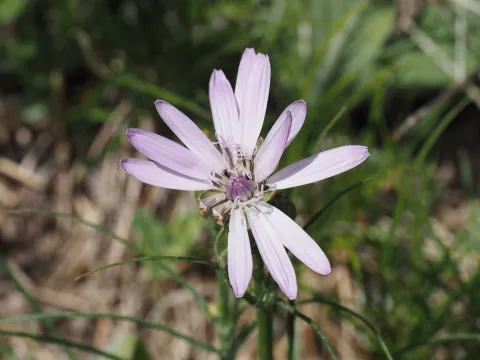
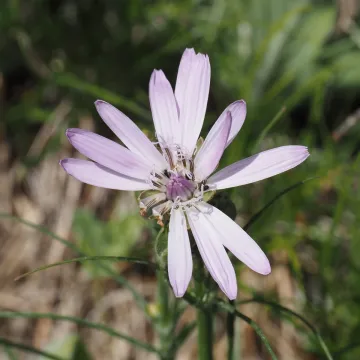
The morphology of the plant is defined by its deep taproot and a basal rosette of pinnately lobed leaves. The plant produces distinctive purple flowers held on stalks reaching significant heights during the reproductive phase. The seeds are light and equipped with a pappus, facilitating wind dispersal. In an agricultural setting, breeders focus on selecting varieties with uniform root thickness and delayed bolting to maximize yield.
Successful cultivation requires soil that is deeply tilled, as the taproot needs to penetrate undisturbed layers to develop fully. Sandy loam or loose alluvial soils are considered ideal. Irrigation should be carefully managed; while the plant is drought-tolerant, consistent moisture during the early seedling stage is critical for establishment. Nitrogen fertilization should be moderate to avoid excessive vegetative growth at the expense of root storage.
- Requires well-drained, deep soil for optimal root shape.
- Susceptible to wireworm damage during the root development phase.
- Resistant to cold, making it suitable for temperate regions.
- Harvesting is typically done in late autumn to ensure maximum sugar content in roots.
Regarding plant health, the main challenges include fungal root rots caused by waterlogging and subterranean insect pests. Implementing a proper crop rotation system, which avoids planting in fields previously occupied by other Asteraceae, is the most effective management strategy. When stored correctly in cool conditions, the roots remain viable for extended periods, highlighting the crop's potential for post-harvest longevity.
Photo gallery