Weyrich's knotweed
Polygonum weyrichii F. Schmidt ex Maxim.
Description
Weyrich's knotweed (Polygonum weyrichii F. Schmidt ex Maxim.) is a robust perennial herbaceous plant belonging to the Polygonaceae family. As an agricultural crop, it is highly valued for its exceptional vegetative growth rate, nutritional profile for livestock, and ability to thrive in regions with cool to temperate climates.
The native range of this species extends across Sakhalin, the Kuril Islands, and parts of East Asia, including Japan and Korea. In its natural habitat, it typically occupies river valleys and mountainous slopes, indicating a preference for soil moisture and cool weather. Its successful introduction as a crop has proven its resilience against various climatic stresses, including frost and seasonal drought.
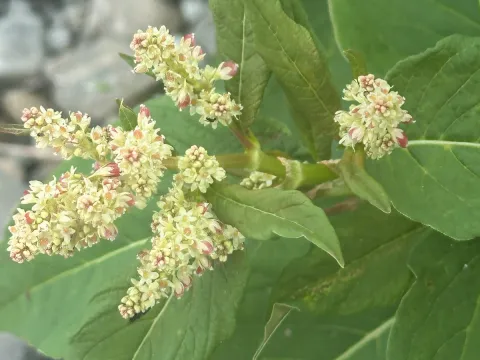
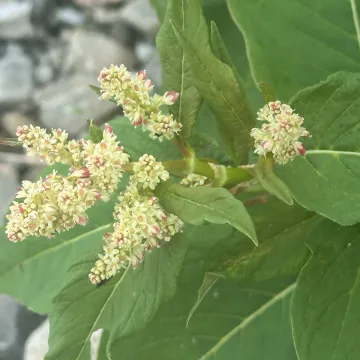
Botanically, it is characterized by a strong, creeping rhizome and vigorous stems that can grow up to 2 meters in height. The foliage is large and heart-shaped, facilitating a high rate of biomass production. During the flowering stage, the plant produces abundant white to creamy-colored panicles, which are highly attractive to pollinators, thereby adding value to integrated farming systems.
To cultivate Weyrich's knotweed successfully, farmers must ensure access to fertile, well-drained, yet consistently moist soils. The plant is relatively low-maintenance once established, persisting in the field for over a decade. Nitrogen-rich fertilization is essential to maximize the crude protein content of the fodder and ensure a rapid recovery after mechanical harvesting or grazing.
Key areas of agricultural application include:
- Production of silage and green fodder rich in essential nutrients.
- High-yielding honey production support during the summer bloom.
- Soil stabilization and erosion control on vulnerable landscape features.
- Potential industrial applications for the extraction of bio-active compounds.
While the plant is generally robust, it may be susceptible to fungal pathogens such as powdery mildew in poorly ventilated or excessively humid conditions. Regular monitoring for common foliar pests and maintaining proper soil drainage are standard practices to prevent crop damage and ensure the longevity of the perennial stand.
Photo gallery