Portulacaria pygmaea
Portulacaria pygmaea
Description
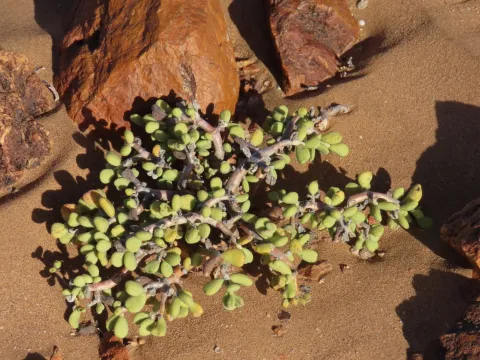
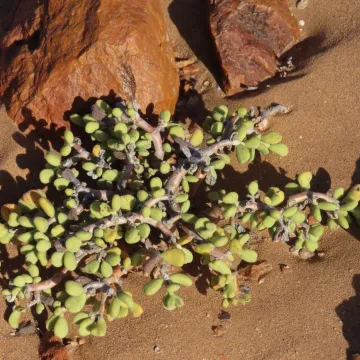
Portulacaria pygmaea is a perennial succulent shrub belonging to the Didiereaceae family. Renowned for its compact growth habit and extreme resilience to drought, this species is a highly valued specimen among succulent enthusiasts and botanical researchers interested in arid-adapted flora.
The plant originates from the arid regions of Southern Africa, primarily found in the coastal deserts of Namibia and South Africa. Its natural habitat is characterized by rocky, nutrient-poor soils and sporadic, minimal rainfall, forcing the plant to develop specialized water-storage mechanisms within its tissues.
Botanically, it is defined by its small, fleshy, grey-green leaves and a thick, woody stem that matures over many years. Its root system is relatively shallow, allowing it to rapidly capture moisture from light fog or brief precipitation events. This slow-growing nature makes it an ideal candidate for long-term container cultivation.
Agrotechnical requirements focus on replicating its native environment. A highly porous, mineral-based soil mix is essential to prevent root rot, which is the primary cause of mortality in cultivation. Full sunlight is necessary to maintain its compact, dense structure; insufficient light often leads to etiolation and structural weakness.
The primary use for Portulacaria pygmaea is in ornamental horticulture, specifically in xeriscaping and professional plant collections. While it does not have large-scale food production value, its role in biodiversity conservation is significant. Growers should monitor for common pests such as mealybugs and ensure consistent ventilation to prevent fungal diseases caused by high humidity.
Photo gallery