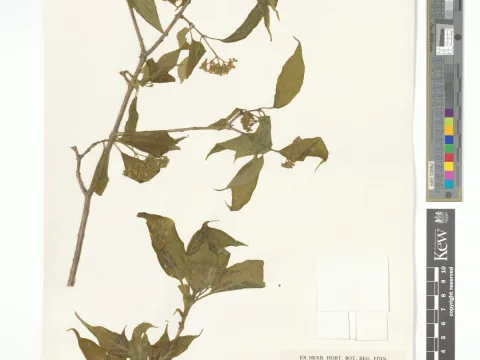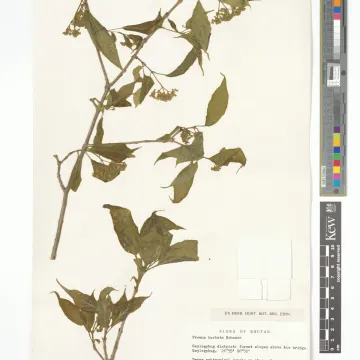

Premna barbata
Premna barbata
Description
Premna barbata is a perennial woody plant species belonging to the Lamiaceae family. Often manifesting as a sturdy shrub or small tree, it is recognized for its adaptability to tropical environments and its significant role in local ecosystems. The plant is botanically distinct due to its foliage characteristics and its ability to thrive in specific climatic niches.
The origin of Premna barbata traces back to the tropical regions of South and Southeast Asia. It is widely distributed across Indian forests and neighboring countries. The species is well-adapted to monsoon cycles and exhibits strong resilience in humid, warm climates, making it a permanent resident of forest margins and woodland clearings in its native range.
Botanically, the plant is characterized by its opposite, often pubescent leaves, which give rise to the term "barbata" (bearded) in its scientific name. The inflorescence consists of dense clusters of small flowers that transition into fleshy, small fruits. These structures support biodiversity by providing food for local bird species and nectar for pollinating insects.
In terms of cultivation, Premna barbata requires well-drained, nutrient-rich soil and consistent moisture to reach its full development potential. While it can tolerate varied soil types, it performs best in soils with high organic matter content. Agrotechnical practices include systematic weeding and manual pruning to maintain the plant's structural integrity and promote healthy new growth throughout the growing season.
The primary agricultural and economic use of this culture lies in the pharmaceutical and traditional wellness sectors. Various parts of the plant, including leaves and stems, are harvested for their therapeutic compounds, which demonstrate anti-inflammatory and antioxidant activities. Furthermore, the plant is increasingly utilized in agroforestry projects to stabilize slopes and serve as a windbreak in managed tropical landscapes.
- Requires protection from extreme, prolonged cold temperatures.
- Shows high resistance to common fungal and pest infestations.
- Can be propagated via stem cuttings or collected seeds.
- Benefits from moderate applications of nitrogen-based organic compost.
Photo gallery