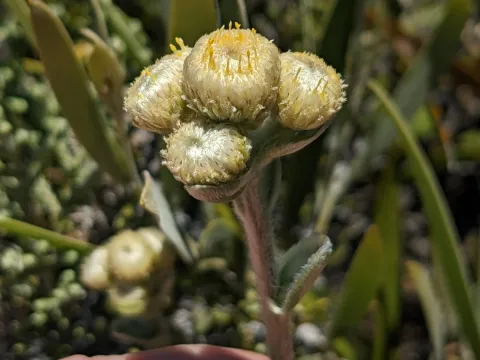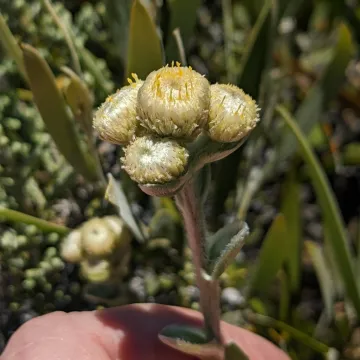
Silver Psiadia
Psiadia argentea
Description
Silver Psiadia (Psiadia argentea) is a perennial shrub belonging to the Asteraceae family. Known for its distinct silvery-white foliage, which is covered in fine hairs to prevent water loss, this plant is increasingly recognized as a viable essential oil and technical crop in specific arid and semi-arid regions.
Originating from the islands of the Indian Ocean, such as Mauritius and Réunion, this plant is naturally adapted to tropical environments with distinct dry seasons. Its current distribution range is focused on regions that favor xerophytic plants, as it thrives in environments where other high-yield crops might struggle due to water limitations and high temperature fluctuations.
Botanically, the species is characterized by its woody structure and dense, lanceolate leaves. These leaves act as a storage site for secondary metabolites, particularly essential oils. The plant produces small flower heads typical of the Asteraceae family, which contribute to its overall biomass and aromatic profile, making it a subject of interest for phytochemical research.
Cultivation of Psiadia argentea requires full sun exposure and well-drained, porous soils. It is highly resistant to drought once established. Agricultural practices focus on periodic pruning, which is essential to manage the shrub's architecture and stimulate the production of fresh, volatile-rich foliage. Soil fertilization should be kept minimal to replicate its natural nutrient-poor habitat conditions.
The primary economic use of the plant lies in the extraction of aromatic oils for cosmetic and medicinal applications. Common pests include aphids and mites, which can be managed through biological control methods. Diseases like powdery mildew may occur if planting density is too high or if air circulation is inadequate, highlighting the importance of proper spacing and ventilation in commercial plantations.
Photo gallery