Psittacanthus cordatus
Psittacanthus cordatus
Description
Psittacanthus cordatus is a hemiparasitic plant species belonging to the Loranthaceae family. Unlike typical agricultural crops, this plant functions as an epiphyte and parasite, deriving its essential nutrients and water from woody host trees. It attaches itself to the host's vascular system using specialized structures known as haustoria.
The species originates from the tropical regions of the Americas, primarily found in the lush rainforests of Central and South America. Its distribution range is closely linked to the presence of host tree species that provide the necessary structural support and hydraulic resources for the parasite's growth throughout the year.
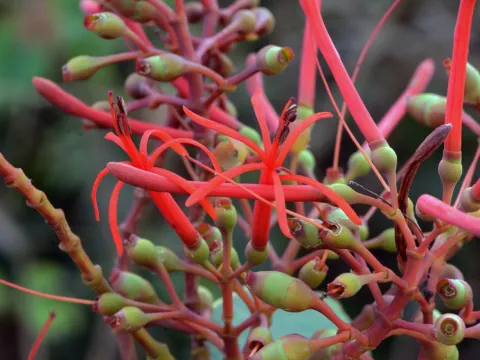
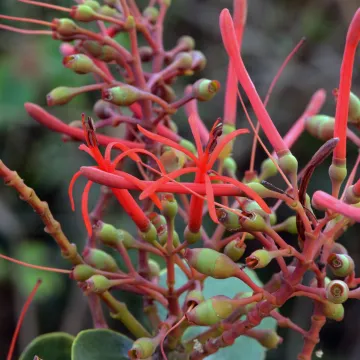
Botanically, the plant is characterized by its distinct, heart-shaped leaves that give it its specific epithet. It produces vibrant inflorescences that attract avian pollinators, which are also responsible for seed dispersal. The seeds are covered in a sticky substance (viscin) that allows them to adhere securely to the bark of host trees once excreted by birds.
Regarding climate and management, this species thrives in high-humidity tropical environments. In forestry, there is no cultivation protocol; instead, the focus is on control and mitigation. Management involves identifying and pruning heavily infested branches to prevent the spread of the parasite and the eventual decline or death of the host tree.
The plant has no positive agricultural use; rather, it is viewed as a botanical threat to forest health. Infestations can lead to reduced timber quality, stunted growth of the host tree, and vulnerability to other environmental stressors. Because it relies entirely on its host, the plant's lifecycle is inextricably linked to the survival of the trees it colonizes.
Photo gallery