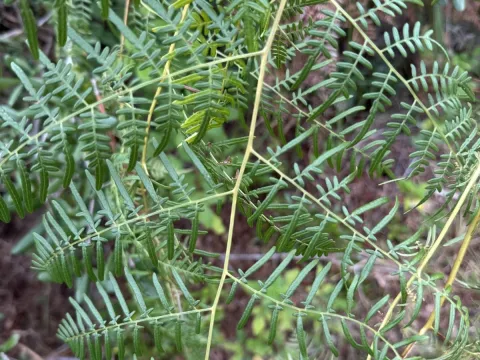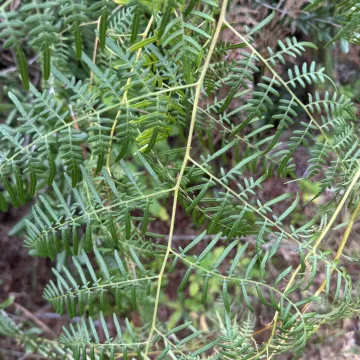
Tail bracken
Pteridium caudatum
Description
Tail bracken (lat. Pteridium caudatum) is a perennial fern species belonging to the Dennstaedtiaceae family. It is a robust plant known for its adaptability to diverse tropical environments, often colonizing disturbed habitats where other vegetation struggles to survive.
The native range of this fern extends across Central and South America and the Caribbean islands. It thrives in regions characterized by distinct wet and dry seasons, typically growing in open woodlands or savanna margins. Its ability to proliferate in acidic and nutrient-poor soils makes it a significant component of its local ecosystem.
Botanically, Pteridium caudatum features stiff, coarse fronds that can grow to impressive sizes, reaching over a meter in height. Its biology is centered around an extensive, deep-seated rhizome system that acts as a reservoir for nutrients and allows for rapid vegetative propagation. The fronds are characterized by a characteristic tail-like morphology, distinguishing them from other related bracken species.
Cultivation requirements involve high soil permeability and sufficient light exposure. While it is not a traditional crop in the commercial sense, its management is crucial in ecological restoration or agroforestry systems. The following factors influence its growth:
- Soil pH levels (prefers acidic environments).
- Available moisture during the early spring flush.
- Control of competition from fast-growing woody species.
- Regular thinning to manage invasive growth.
In terms of economic utility, the biomass of the tail bracken can be harvested for organic mulch or integrated into soil improvement programs due to its high carbon content. However, growers should be cautious about potential toxicity if consumed by livestock. Standard maintenance includes monitoring for common fern pests such as scale insects or mealybugs, and ensuring adequate air circulation to prevent fungal leaf spot diseases.
Photo gallery