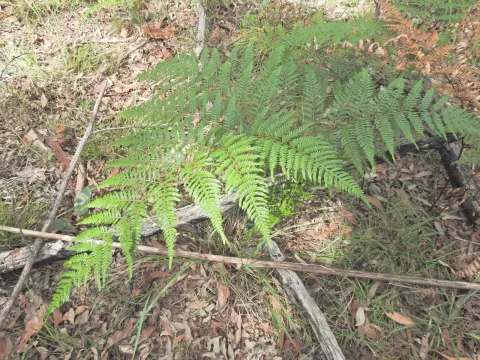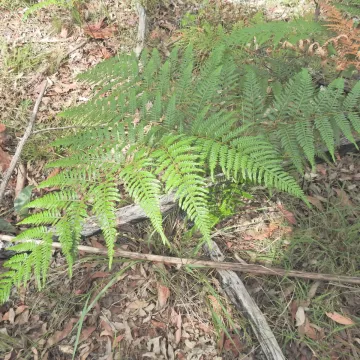
Pteridium esculentum
Pteridium esculentum
Description
Pteridium esculentum, commonly known as Austral bracken, is a perennial fern belonging to the family Dennstaedtiaceae. It is a robust plant recognized historically for its edible rhizomes, which were a traditional staple food for indigenous populations, providing a vital source of starch in various regions including Australia, New Zealand, and South America.
The origin of this species is primarily linked to the Southern Hemisphere, where it thrives in diverse environments ranging from open woodlands to heathlands. It is well-known for its aggressive colonization of land following forest fires, acting as a pioneer species that prepares the soil for subsequent vegetation while preventing erosion in vulnerable areas.
Botanically, the plant is characterized by a deep-seated creeping rhizome system that allows for rapid vegetative spread. The fronds are firm, often reaching significant heights, with a characteristic branching pattern typical of the bracken group. The rhizomes store large amounts of starch, which must be processed and cooked thoroughly to be rendered safe and edible for human consumption.
Successful cultivation requires well-drained, acidic to neutral soil and ample sunlight. While the plant is remarkably hardy and resistant to many environmental stresses, it requires careful management in agricultural settings to prevent it from becoming an invasive weed. Proper irrigation and soil structure management are essential for healthy frond development and rhizome biomass accumulation.
Economic and practical uses include food production and ornamental landscaping in suitable climates. To ensure health and productivity in a managed environment, growers should implement the following strategies:
- regular inspection for fungal leaf spot diseases;
- monitoring for insect larvae that feed on tender fronds;
- controlling spread through physical rhizome barriers;
- maintaining soil moisture balance without waterlogging.
Photo gallery