
Round-leaved wintergreen
Pyrola rotundifolia
Description
Round-leaved wintergreen (Latin: Pyrola rotundifolia) is a perennial herbaceous plant belonging to the Ericaceae family. Known for its persistent foliage, this plant thrives in the understory of coniferous and mixed forests throughout the temperate regions of the Northern Hemisphere, including Europe and Asia.
The plant is widely distributed across moist, shaded environments, often found in mossy habitats where the soil is slightly acidic. Its geographic range is vast, covering diverse climates from oceanic regions to the interior parts of the boreal forest zone, demonstrating significant hardiness.
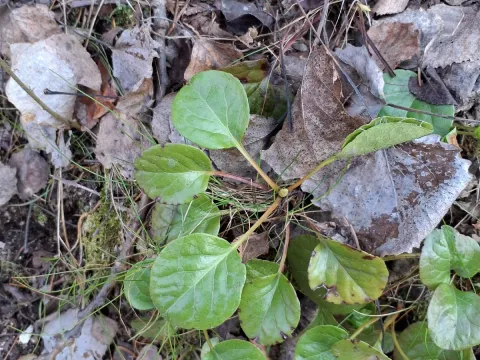
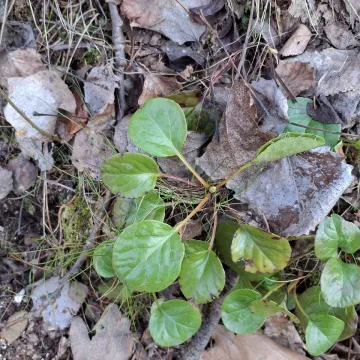
Botanically, the species is defined by its basal rosette of leathery, rounded leaves. During the summer, it produces an erect raceme featuring white, fragrant, nodding flowers. The plant is distinct for its complex root system that depends on mycorrhizal fungi, which are essential for nutrient uptake in its natural woodland habitat.
Regarding growth requirements, it is notoriously difficult to cultivate in standard garden soils. It demands a specific acidic soil composition, high humidity, and shade. Because of these strict requirements, it is rarely grown as an agricultural crop, and most herbal supply is sourced through controlled wild harvesting.
The plant is traditionally utilized in herbal medicine for its antiseptic and anti-inflammatory properties. Extracts are sometimes used in traditional tinctures to treat urinary tract conditions. Due to its growth in protected forest areas and its reliance on specific soil symbionts, it is largely unaffected by common agricultural pests.
Photo gallery