Rhodes grass
Chloris gayana Kunth
Description
Rhodes grass (Chloris gayana Kunth) is a perennial, stoloniferous grass belonging to the Poaceae family. It is globally recognized as one of the most productive and adaptable forage species, essential for sustainable livestock production in tropical and subtropical climates.
Native to Africa, Rhodes grass has spread across many continents, including Australia, the Americas, and Southeast Asia. Its ability to colonize diverse landscapes, ranging from sandy soils to heavy clays, has made it a preferred choice for farmers looking to restore land and provide high-quality feed for grazing animals.
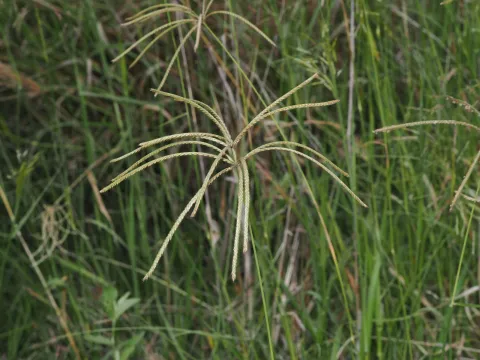
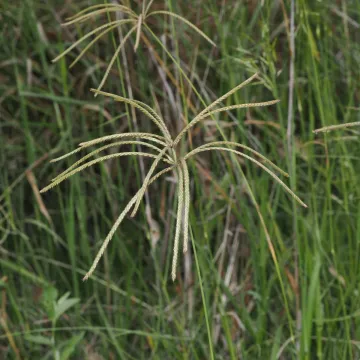
The plant features a distinct botanical structure, characterized by leafy stolons that spread horizontally and root at the nodes. This mechanism allows the grass to form dense swards, effectively preventing soil erosion and maintaining surface moisture. Its inflorescence is a fan-like cluster of spikes, which makes it easily identifiable during the flowering phase.
For optimal productivity, Rhodes grass requires full sun and well-drained soils. While it is remarkably drought-tolerant, its yield is significantly improved with proper irrigation and nitrogen-rich fertilization. It is also famous for its salt tolerance, making it an excellent candidate for agricultural land that has been affected by salinity.
The primary agricultural use is for grazing, haymaking, and silaging. It provides high-quality protein-rich forage that is highly palatable to cattle and sheep. Pests such as aphids and grasshoppers can occasionally impact growth, while fungal diseases like rust might appear in very humid conditions, requiring farmers to implement standard pest management practices.
Photo gallery