Shaggy moss
Rhytidiadelphus triquetrus
Description
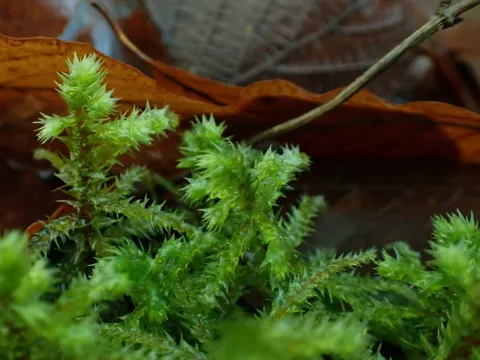
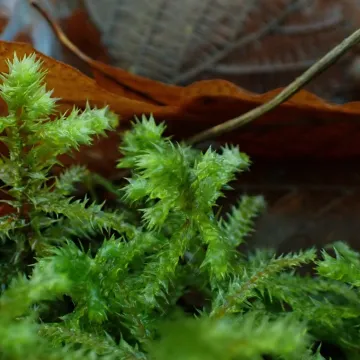
Shaggy moss (Rhytidiadelphus triquetrus) is a perennial pleurocarpous moss belonging to the Hylocomiaceae family. It is recognized by its large, robust, and irregularly branched stems, which form extensive, springy carpets on the forest floor, serving as a critical biological component of healthy temperate ecosystems.
The native range of this species covers much of the Northern Hemisphere, extending through North America, Europe, and Asia. It predominantly thrives in coniferous and mixed-wood forests, where the dense canopy provides the necessary shade and humidity required for its optimal growth and reproductive cycles.
Botanically, it is characterized by its distinct, somewhat triangular leaf arrangement and its ability to grow up to 20 centimeters in length. The shoots are reddish-brown at the base and turn a vivid, healthy green toward the tips. Unlike vascular plants, it lacks a true root system, relying on water absorption through its leafy structures from the surrounding air and soil surface.
Cultivation of this moss requires careful microclimate management, specifically mimicking a forest environment. Success depends on maintaining high atmospheric humidity, protection from direct sunlight, and a moist, neutral-to-acidic substrate. In agricultural or horticultural settings, it is best placed in specialized terrariums or shaded rock gardens where irrigation can be strictly controlled.
Regarding its хозяйственное utility, it is increasingly valued in sustainable landscaping and ecosystem restoration projects. While it faces few traditional pests, it is highly sensitive to air pollution and changes in micro-hydrology. Maintaining clean air and consistent but not stagnant moisture is essential to prevent decay and ensure the longevity of the moss carpet.
Photo gallery