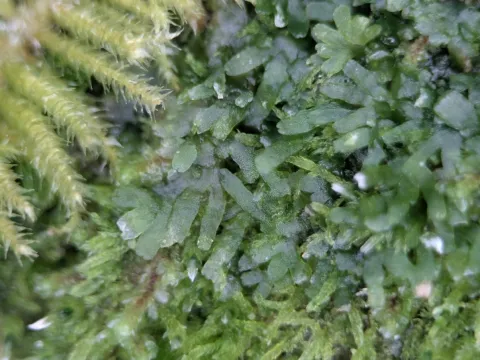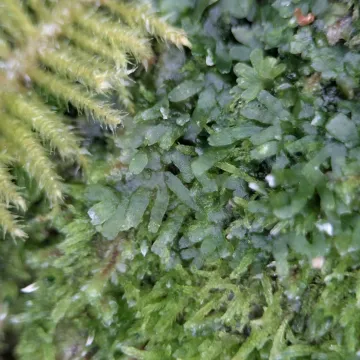
Riccardia latifrons
Riccardia latifrons
Description
Riccardia latifrons is a species of liverwort belonging to the family Aneuraceae. While not a conventional agricultural crop, it is a specialized botanical culture highly regarded in the fields of aquaculture, terrarium design, and scientific research on bryophyte development, known for its ability to form lush, deep green mats.
The origin of this species is widespread across the Northern Hemisphere, where it thrives in moist, shaded environments such as temperate and tropical forests. It naturally colonizes decaying wood, damp peat, and wet rocky crevices, which serves as a biological blueprint for recreating its optimal conditions in human-controlled growing environments.
Botanically, Riccardia latifrons is characterized by a thalloid structure lacking true leaves or stems. Its thallus is repeatedly branched with characteristic wide lobes, contributing to its compact growth form. Reproduction in this species typically occurs via vegetative fragmentation, although it can produce spores under specific environmental triggers that allow for colonization of new surfaces.
Cultivation requirements for this crop focus on high atmospheric humidity, typically exceeding 80%, and a consistently moist substrate with a slightly acidic pH (5.5–6.5). The species is highly sensitive to intense lighting, which can cause scorching or yellowing; therefore, diffuse or moderate light levels are essential for maintaining the health and vivid color of the thallus.
The agricultural and commercial applications of Riccardia latifrons are primarily centered on:
- Decoration of aquascapes and paludariums to simulate natural forest floors.
- Bio-filtration support in small-scale aquarium systems.
- Supplying hobbyists and specialized botanical garden nurseries.
- Experimental use in botanical tissue culture studies.
Common health issues in cultivation include fungal pathogens and rot caused by stagnant water or poor air circulation. Furthermore, the introduction of pests like sciarid flies can damage the delicate lobes of the thallus. Effective management involves maintaining a clean growth medium and ensuring proper ventilation to prevent the buildup of anaerobic conditions that favor disease development.
Photo gallery