Riccardia multifida
Riccardia multifida
Description
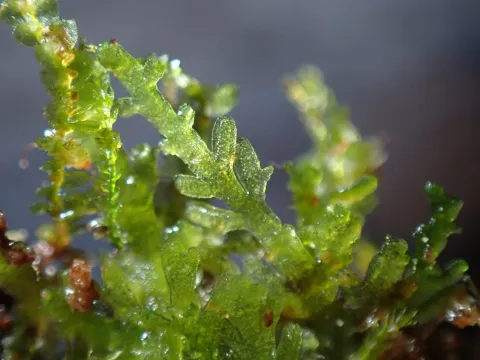
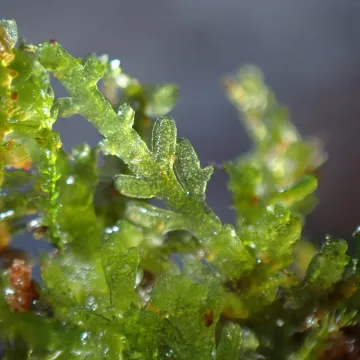
Riccardia multifida is a species of thalloid liverwort within the Aneuraceae family. This bryophyte is characterized by its complex, dichotomously branched thallus, which forms dense, intricate mats. Unlike vascular plants, it lacks true roots, relying on rhizoids for attachment to moist substrates, while nutrient absorption occurs directly through its green, flattened thallus tissues.
The species possesses a cosmopolitan distribution, occurring in temperate and tropical regions worldwide. It is naturally adapted to habitats with high constant humidity, such as stream banks, wetlands, and decaying wood in forests. Its presence is highly dependent on ambient moisture levels and it is often found in areas protected from direct, desiccating wind and intense sunlight.
Botanically, Riccardia multifida is recognized by its small stature and distinctive branching pattern. The thallus is typically narrow and translucent green. Reproduction is achieved through the formation of male and female reproductive structures or by fragmentation, where small pieces of the thallus can regenerate into full-grown colonies under favorable environmental conditions.
Regarding its cultivation, Riccardia multifida requires specific care protocols. In controlled environments such as greenhouses or aquariums, it prefers cool to moderate temperatures between 18°C and 24°C. The substrate should be slightly acidic to neutral, and the plant benefits from supplemental fertilization rich in essential micronutrients to promote lush, dark green growth.
The primary economic use of this liverwort is within the ornamental aquarium industry and vivarium setups. Aquascapers value Riccardia for its slow-growing, refined aesthetic, which makes it ideal for foreground detailing or attaching to rocks and driftwood to simulate natural forest floors under water. Its popularity has led to organized propagation efforts by specialized aquatic nurseries.
Management of pests and pathogens involves maintaining optimal water quality. Bacterial infections, often manifesting as softening or bleaching of the thallus, are usually a result of poor filtration or excessive organic decomposition. Controlling herbivorous snails and crustaceans is essential, as these animals can rapidly degrade established moss colonies.
Photo gallery