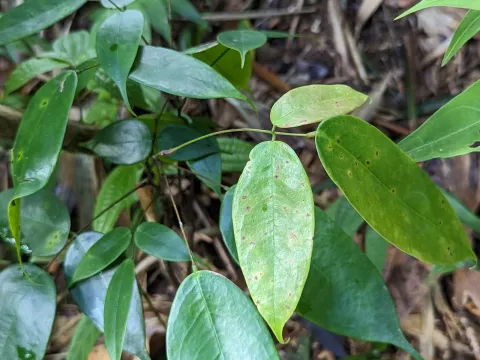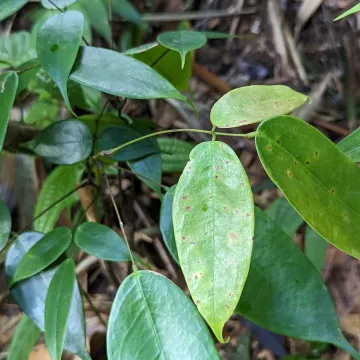
Rourea surinamensis
Rourea surinamensis
Description
Rourea surinamensis is a woody vine belonging to the Connaraceae family. Known for its climbing growth habit, this plant acts as a structural component in the understory of tropical forests, utilizing larger vegetation as support to reach sunlight in the canopy layer.
The species is native to the tropical regions of South America, particularly common in Suriname and neighboring countries. It thrives in environments characterized by high humidity, abundant rainfall, and consistently warm temperatures, showing limited tolerance for thermal fluctuations or prolonged droughts.
Botanically, Rourea surinamensis is defined by its pinnate, leathery leaves and specialized flowering structures. The reproductive cycle results in single-seeded capsules, which are essential for its natural propagation. The plant's morphology is highly specialized for survival in competitive, dense forest environments.
Cultivation requires careful management of environmental parameters:
- High ambient humidity is essential for leaf health.
- Well-draining, nutrient-rich, acidic to neutral soil is preferred.
- Consistent irrigation is required, while avoiding waterlogged conditions.
- Sturdy support structures are necessary to accommodate the vine's natural growth pattern.
The plant has been utilized in indigenous ethnomedicine, though its primary modern significance remains within botanical collections and research sectors. Common pests include sap-sucking insects like mealybugs, and fungal diseases typically appear if air circulation is inadequate or if soil drainage is compromised.
Photo gallery