Bristle-leaf wallaby grass
Rytidosperma setifolium
Description
Bristle-leaf wallaby grass (Rytidosperma setifolium) is a perennial grass belonging to the Poaceae family. It is a significant species in the Australian landscape, recognized for its resilience and ability to thrive in challenging environments where other forage species might struggle to survive.
The native distribution of this species is primarily focused on southern Australia and Tasmania. It is commonly found in sub-alpine grasslands, rocky outcrops, and open woodland areas. These regions are characterized by fluctuating temperatures and varying precipitation, to which the plant has developed robust survival mechanisms.
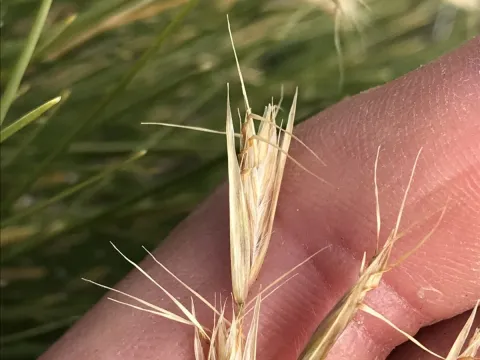
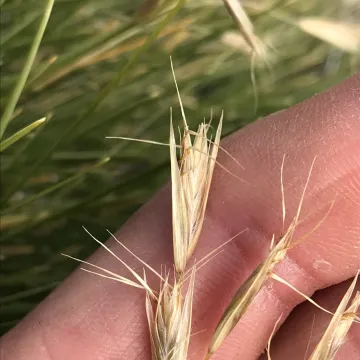
Botanically, Rytidosperma setifolium is distinguished by its fine, bristle-like leaves arranged in dense tussocks. The structure of the plant is designed to conserve water and withstand high winds. The inflorescence is typically a narrow, compact panicle that produces seeds capable of germinating under a variety of environmental conditions.
Regarding cultivation requirements, the grass prefers well-drained, nutrient-poor soils and requires full sun exposure to achieve optimal biomass production. Its agricultural management emphasizes low-input practices, as it does not require significant fertilization. During the establishment phase, it is crucial to ensure minimal weed competition, as the initial growth rate is relatively slow.
The primary agricultural and ecological use of this species includes pasture improvement in high-altitude zones and land reclamation projects. It serves as an excellent ground cover, effectively preventing soil erosion on slopes and in disturbed sites.
- High tolerance to grazing pressure.
- Excellent soil stabilization properties.
- Adaptability to low-nutrient substrates.
- Winter-hardy performance in temperate climates.
While the plant is generally hardy, it can be susceptible to standard grass pathogens if growing conditions are compromised, such as prolonged waterlogging. Typically, pests are not a major factor for this species in managed pastures, as its tough, fibrous leaf structure acts as a natural deterrent against many generalist herbivorous insects.
Photo gallery