
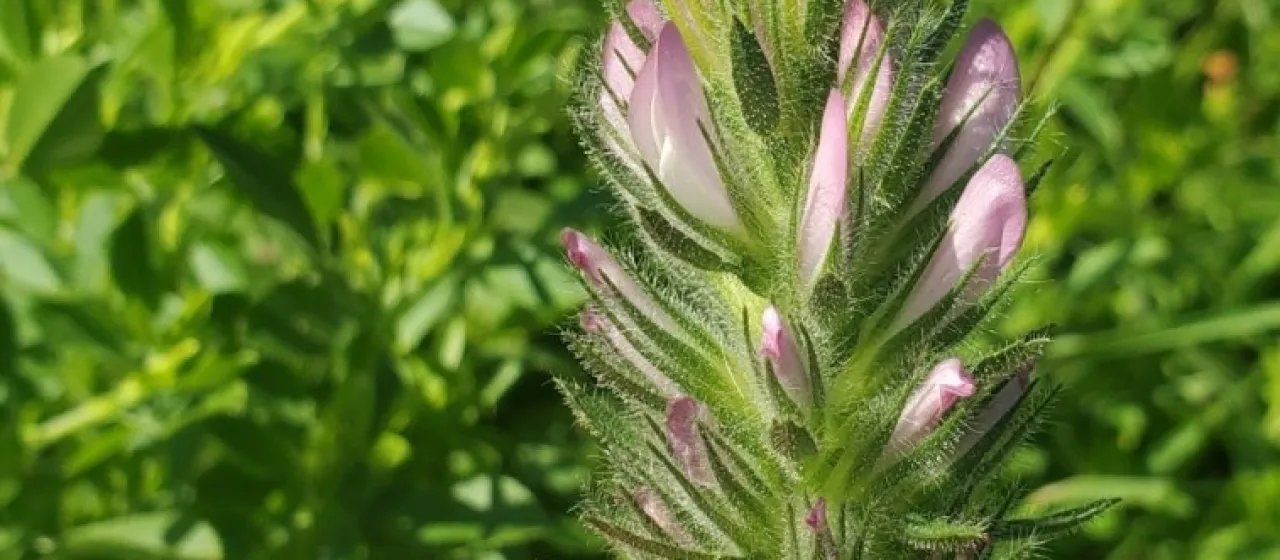
Description
Fox-tail restharrow (Ononis alopecuroides L.) is an annual herbaceous plant belonging to the Fabaceae family. While less common than some commercial legumes, it is recognized for its unique biological properties and its evolutionary adaptation to specific Mediterranean ecological niches.
The plant originates from the Mediterranean basin, covering regions across Southern Europe, North Africa, and parts of the Middle East. It thrives in arid and semi-arid conditions, preferring well-drained, lime-rich soils and high levels of sunlight, which are typical for its natural habitat.
Botanically, it is characterized by its distinctive fox-tail-like spike inflorescences, which give the plant its common name. The stems are usually pubescent, and the foliage consists of simple or trifoliate leaves with serrated margins. Its root structure is adapted to stabilize the plant in sandy or rocky substrates.
In terms of agricultural practice, cultivation requires careful site selection focusing on soil aeration. Excessive nitrogen fertilization is generally not recommended, as the plant is adapted to nutrient-poor soils and may lose its chemical potency if over-stimulated. Irrigation should be minimal, as the crop is highly susceptible to root rot in waterlogged conditions.
The economic value of this crop is primarily found in its medicinal properties and its potential as an auxiliary forage plant. Extracts from the plant are known for their traditional use in addressing inflammatory conditions. Farmers must remain vigilant against pests such as aphids and leaf miners, which can significantly damage the foliage if not managed with integrated pest control measures.