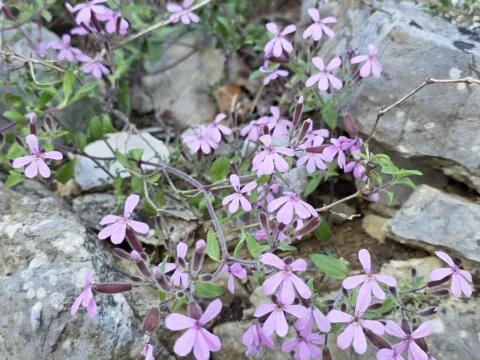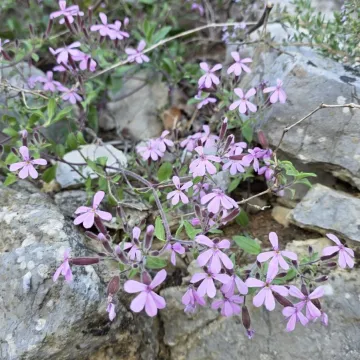
Rock soapwort
Saponaria ocymoides L.
Description
Rock soapwort (Saponaria ocymoides L.) is a perennial herbaceous plant belonging to the Caryophyllaceae family. This ornamental crop is highly regarded in horticulture for its rapid growth habit and its ability to create dense, vibrant floral carpets, making it an essential component of rock gardens and floral borders.
The plant is native to the mountainous regions of Southern Europe. Its natural habitat includes stony slopes and rock crevices, which has adapted the species to thrive in thin, well-draining soils with limited nutrients. This evolutionary background makes it an excellent choice for xeriscaping and sustainable garden designs.
Botanically, it features trailing, branched stems that grow to a height of about 15–20 cm. Its leaves are small, lanceolate, and resemble those of basil, which provides the inspiration for its scientific name. During the summer, the plant produces an abundance of small, star-shaped flowers that range from soft pink to deep magenta in color.
Cultivation requires minimal input, provided that the essential needs of the plant are met. It demands excellent soil drainage; heavy, waterlogged soils can quickly lead to root rot. Ideally, it should be planted in full sun, although it can tolerate partial shade in hotter climates. Light pruning after the flowering peak is recommended to maintain a compact habit and encourage a secondary bloom.
Regarding health and maintenance, rock soapwort is generally pest-resistant and robust. The most common issues arise from environmental factors rather than insects, specifically fungal infections linked to poor airflow or excessive humidity. By maintaining proper spacing and avoiding overhead irrigation during humid weather, gardeners can easily prevent most common diseases affecting this species.
Photo gallery