Willow-leaved sweet box
Sarcococca saligna
Description
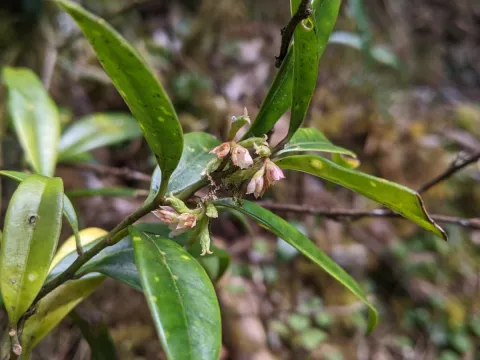
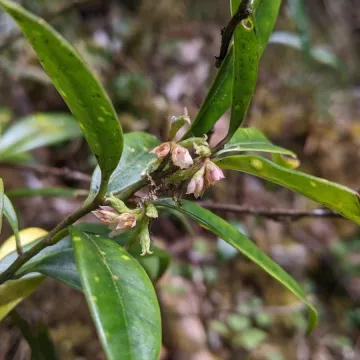
Sarcococca saligna, commonly known as the willow-leaved sweet box, is a refined evergreen shrub belonging to the Buxaceae family. It is distinct from its cousins due to its narrow, lance-shaped leaves that create a graceful, drooping appearance, adding texture to the landscape.
Native to the Himalayan regions of India, Pakistan, and Nepal, this shrub thrives in cool, woodland environments. Its natural habitat is characterized by damp, humus-rich soils found on forest floors, which dictates its preference for shaded locations when introduced into cultivation.
Botanically, it reaches a height of up to 1.5 meters. The plant is prized for its winter-flowering habit; it produces small, creamy-white flowers that are not visually striking but are highly fragrant, filling the garden with a sweet, honey-like scent during the late winter and early spring months.
In terms of horticulture, Sarcococca saligna requires a sheltered spot in full or partial shade. The soil must be moist yet well-draining, with an acidic to neutral pH. It is not fully hardy in severe climates and may require winter protection or cultivation in containers that can be moved indoors.
The shrub is primarily used in landscape design for ground cover or as a specimen plant in woodland gardens. While generally robust, it should be monitored for pests such as scale insects. Proper spacing and avoiding over-watering are key to preventing common fungal root diseases.
Photo gallery