Saxifraga fortunei
Saxifraga fortunei (Maxim.) Hook. f.
Description
Saxifraga fortunei, commonly known as Fortune's saxifrage, is a perennial herbaceous plant belonging to the Saxifragaceae family. It is highly valued in horticulture for its distinct habit of flowering in late autumn, providing a striking display when most other perennials have finished their growth cycle.
The native distribution of this species spans across East Asia, including China, Japan, and the Korean Peninsula. It naturally inhabits cool, moist, and shaded cliff faces or forest floors, which dictates its specific environmental requirements when cultivated in gardens or specialized nursery settings.
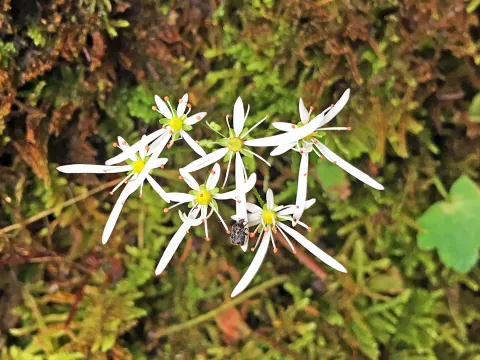
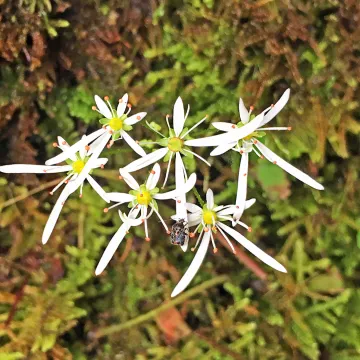
Botanically, the plant is characterized by a dense rosette of basal, kidney-shaped leaves with an attractive texture. The plant produces delicate, asymmetric flowers borne on slender, erect stalks, creating a cloud-like appearance. The flower color palette ranges from pure white to deep shades of pink and crimson.
Agronomical requirements for successful cultivation include partial shade, consistently moist but well-drained soil, and protection from harsh midday sun. High levels of organic matter in the soil are beneficial, and careful mulching helps maintain the root temperature, which is critical for the plant's long-term vitality.
The primary use of Saxifraga fortunei is in ornamental landscaping, particularly in rock gardens, shady borders, and containers. The plant is susceptible to fungal rots if drainage is inadequate. Additionally, common garden pests such as slugs and snails represent the most significant threat to its foliage during the wet autumn months.
Photo gallery