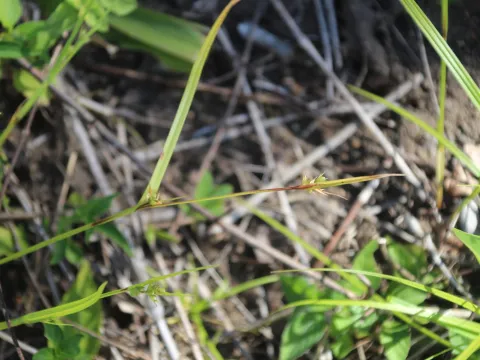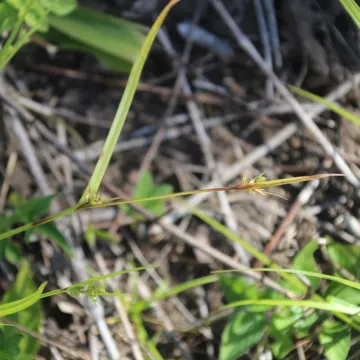

Scleria foliosa
Scleria foliosa
Description
Scleria foliosa is a perennial herbaceous plant belonging to the Cyperaceae (sedge) family. In the context of tropical agriculture, it is recognized as a resilient component of wetland ecosystems and native grasslands. Its ability to thrive in fluctuating moisture conditions makes it an interesting subject for studies on sustainable land use in tropical and subtropical climatic zones.
The native range of Scleria foliosa includes diverse tropical regions throughout Central and South America. It typically inhabits marshes, wet meadows, and the riparian zones of various water bodies. The plant is well-adapted to high-humidity environments and can tolerate soils that remain saturated for extended periods, where other forage species might struggle to survive due to root asphyxiation.
Botanically, the species is distinguished by its characteristic triquetrous (three-angled) stems and leafy architecture. The leaves are generally linear and distributed along the stem, providing substantial coverage. The plant utilizes a rhizomatous root system, which allows it to form dense clusters or mats. This feature is particularly valuable for soil stabilization and preventing erosion in vulnerable wetland agricultural sites.
Regarding cultivation requirements, Scleria foliosa prefers soils that are nutrient-rich with a slightly acidic to neutral pH. While it is rarely grown as a monoculture, its management in natural grazing systems involves regulating the intensity of livestock grazing. Proper management ensures that the plant does not become overly lignified, thereby maintaining its palatability and nutritional profile for grazing animals.
Agricultural use focuses primarily on livestock forage and land cover restoration. Pathogens and pests of concern include:
- Fungal leaf spots triggered by persistent high humidity and poor air circulation.
- Root-feeding insects that become active during transition seasons between dry and wet periods.
- Various rust pathogens that can limit biomass production in dense stands.
Photo gallery