Sclerolaena birchii
Sclerolaena birchii
Description
Sclerolaena birchii, commonly known in Australia as the Galvanised burr, is a perennial herb or small shrub belonging to the Amaranthaceae family, within the Chenopodioideae subfamily. This species is highly specialized for arid and semi-arid environments, demonstrating remarkable physiological mechanisms to cope with water scarcity and challenging soil conditions.
The plant is native to the drier regions of Australia, particularly across Queensland and New South Wales. It thrives in open woodlands and shrublands, often colonizing disturbed sites where the vegetation cover has been depleted. Its role in the landscape is significant, as it acts as a primary stabilizer for degraded lands.
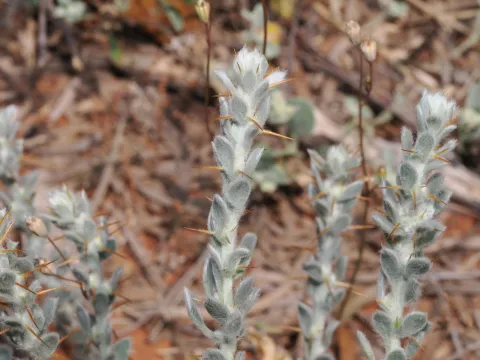
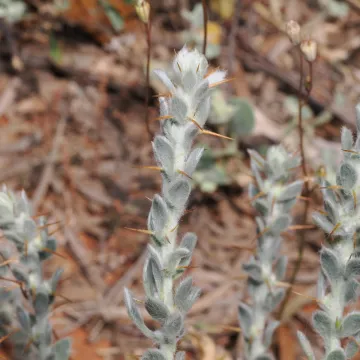
Botanically, it is recognized by its dense, branching structure and distinctive prickly, spine-bearing fruits. These fruits are designed for effective dispersal but are also the reason for the plant's reputation in agricultural circles. The leaves are typically succulent and small, which minimizes transpiration rates under high solar radiation and temperature.
Regarding climate and soil requirements, Sclerolaena birchii prefers well-drained, sandy to loamy soils. It is highly intolerant of waterlogged conditions and prefers regions with low, erratic rainfall. In terms of agronomy, its cultivation is usually focused on land rehabilitation and soil erosion control rather than intensive farming, due to its low nutritional value compared to domestic forages.
From an agricultural standpoint, it serves as a opportunistic forage source in extreme environments, though its burrs can be a nuisance for livestock, potentially causing injury or reducing wool quality. It is primarily managed as a native component of pasture systems to prevent soil erosion and maintain biodiversity in fragile arid ecosystems.
- Extreme drought tolerance
- Effective soil stabilization properties
- Adaptability to nutrient-poor substrates
- Spiny burrs as a defense mechanism against overgrazing
Photo gallery