Sclerolaena muricata
Sclerolaena muricata
Description
Sclerolaena muricata is a perennial subshrub belonging to the Amaranthaceae family, commonly associated with the Chenopodioideae subfamily. It is a highly resilient plant species adapted to the challenging environments of arid and semi-arid landscapes, where it serves as a critical component of the local vegetation cover.
The native range of this plant is primarily Australia, where it thrives in environments characterized by extreme temperature fluctuations and irregular rainfall. Sclerolaena muricata is highly valued for its ability to stabilize loose soil surfaces, effectively acting as a barrier against erosion in desert and semi-desert regions.
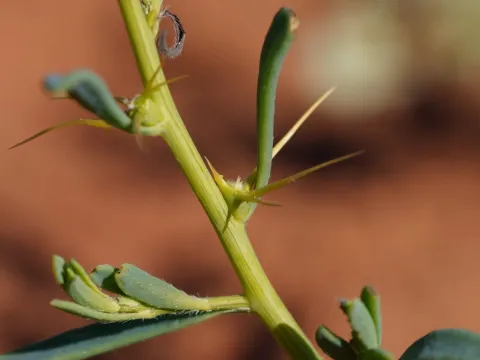
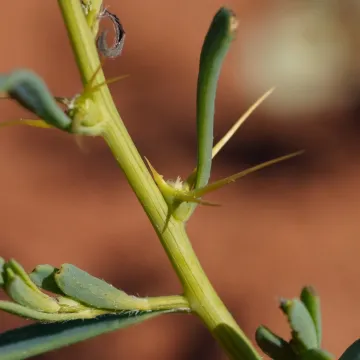
Botanically, the species is defined by its bushy, branching structure and small, succulent-like leaves that are evolved to conserve water. The most distinct feature is the fruiting structure, which is covered in sharp, spine-like appendages. These spines serve as a protective mechanism for the seeds and aid in dispersal by sticking to the fur of passing animals.
Regarding cultivation and agronomy, the plant does not require high-fertility soil and prefers well-drained, saline, or sandy textures. It demonstrates significant salt tolerance, allowing it to grow in soils where most conventional agricultural crops would fail. It requires minimal management, primarily consisting of controlled grazing to maintain stand health and population density.
The agricultural utility of Sclerolaena muricata is largely focused on rangeland management. It serves as a vital forage source for livestock, particularly sheep, during the dry seasons when other forage plants have desiccated. Typical challenges include common fungal infections under damp conditions and browsing pressure from specific insect populations endemic to the Australian outback.
Photo gallery