Shining currant
Searsia lucida
Description
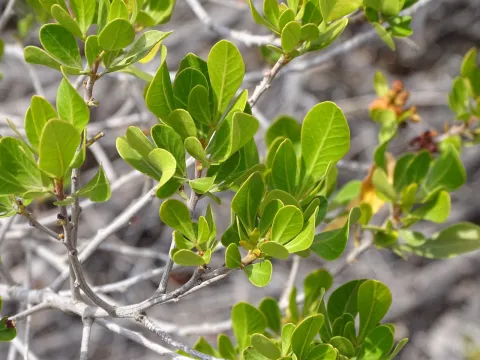
Searsia lucida, commonly known as the shining currant, is a robust evergreen shrub belonging to the Anacardiaceae family. Recognized for its dense, glossy foliage and compact habit, this plant is a staple in many garden designs, particularly in regions with a Mediterranean or temperate coastal climate where it thrives with minimal intervention.
The plant originates from Southern Africa, where it is found in diverse habitats ranging from coastal dunes to mountainous rocky outcrops. This natural distribution has endowed the species with exceptional environmental resilience. It is highly adapted to cope with the harsh conditions of its native range, including intense solar radiation and exposure to salt-laden winds.
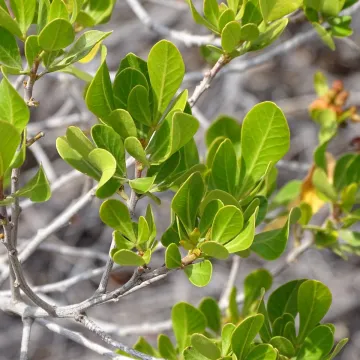
Botanically, the species is defined by its tough, leathery, and distinctly shiny leaves, which are often trifoliate. As a medium-sized shrub, it can grow up to 3 meters in height. The inflorescences consist of small, greenish-yellow flowers that appear in panicles, later giving way to small, drupaceous fruits that are highly attractive to local bird populations.
Regarding climate and soil requirements, Searsia lucida prefers well-draining soils with moderate fertility. While it is significantly drought-tolerant once established, providing consistent moisture during the early stages of development will encourage faster growth. It is relatively free from serious pests and diseases, though poor drainage can occasionally lead to root rot, which should be mitigated through careful site selection.
The primary horticultural and agricultural uses of this species include:
- Acting as an effective windbreak and privacy screen in residential gardens.
- Enhancing coastal landscapes due to high salt tolerance.
- Providing structural interest in xeriscaping projects.
- Serving as a food source for birds, thereby promoting local biodiversity.
Photo gallery