Searsia pentaphylla
Searsia pentaphylla
Description
Searsia pentaphylla, commonly known as a member of the Anacardiaceae family, is a resilient perennial shrub. Formally classified under the genus Searsia, it is well-regarded for its ability to thrive in challenging environments where water scarcity and poor soil quality often limit traditional agriculture.
The plant originates from the arid regions of North Africa and parts of Southern Europe. Its natural distribution is linked to Mediterranean-type climates, where it has evolved specific physiological mechanisms to survive high temperatures and limited precipitation during the summer months.
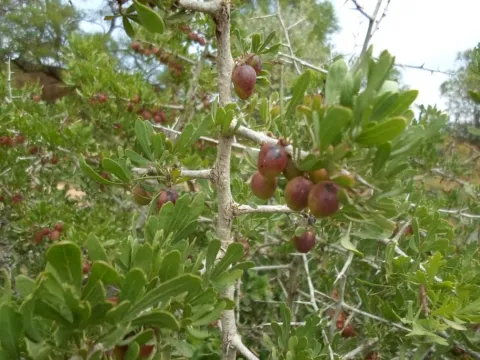
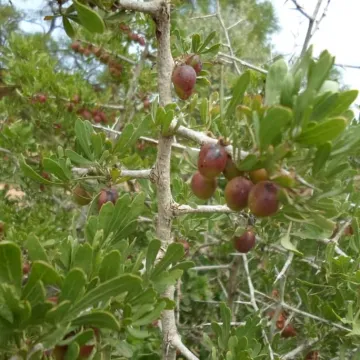
Botanically, it presents as a dense, often thorny shrub with trifoliate or pentafoliate leaves. The fruits are small, dark drupes that serve as a food source for local fauna. Its structural resilience allows it to function effectively as a barrier plant or a stabilizer for slopes prone to soil erosion.
Regarding cultivation, Searsia pentaphylla is low-maintenance but requires full sun exposure and well-drained soil. It is highly intolerant of waterlogging, which can cause root decay. In terms of agronomy, it requires very little fertilization, as it is adapted to nutrient-poor, rocky substrates found in its native range.
Historically and economically, this species is valued for its tannins extracted from the bark, which are utilized in leather processing. Furthermore, in modern agricultural planning, it is increasingly recognized for its role in sustainable land management and the prevention of desertification in arid farming zones.
- Extreme drought and heat tolerance.
- Significant tannin content for industrial use.
- Excellent performance in soil erosion control.
- Adaptability to nutrient-deficient rocky soils.
- Low susceptibility to common agricultural pests and diseases.
Photo gallery