Sal tree
Shorea robusta C. F. Gaertn.
Description
The Sal tree (Shorea robusta) is a prominent species belonging to the Dipterocarpaceae family. Native to the Indian subcontinent, it is one of the most important timber trees in the region, known for its majestic size and ecological resilience in tropical forests.
Geographically, its range extends across India, Nepal, and parts of Myanmar. The tree thrives in regions with tropical monsoon climates, where it often forms dense, semi-evergreen or deciduous forests. Its ability to dominate the landscape makes it a key species for reforestation projects and biodiversity conservation.
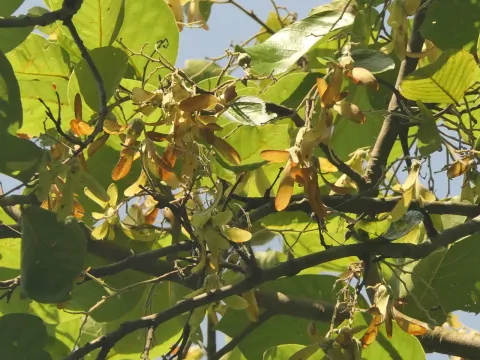
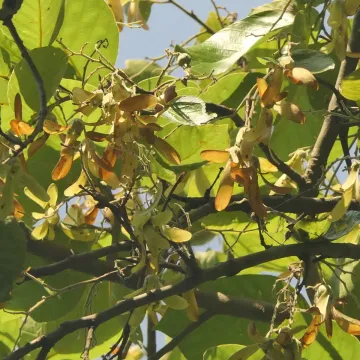
Botanically, the Sal tree is characterized by a straight, cylindrical trunk and leathery, ovate leaves. The flowers are small and yellow, arranged in panicles, blooming during the dry season. The fruit is a winged nut, which is wind-dispersed, allowing the species to colonize new areas efficiently after the monsoon rains.
Cultivation requires deep, well-drained loamy soils to ensure optimal growth. While the tree is hardy once established, seedlings require protection from excessive weeds and fire. Agricultural management involves careful site selection and spacing to ensure that each tree receives adequate sunlight, which is critical for the development of a healthy and straight bole.
- High-quality timber for heavy construction and furniture.
- Production of Sal resin used in traditional medicine and incense.
- Edible seeds used in local cuisine and as animal fodder.
- Eco-friendly harvesting of non-timber forest products.
- Significant carbon sequestration potential in forestry.
The main challenges in cultivating Shorea robusta include susceptibility to root rot fungi and infestations by defoliating insects or seed borers. A proactive silvicultural approach, including regular forest hygiene and the maintenance of a balanced ecosystem, is essential to minimize the impact of pests and diseases on the plantation yield.
Photo gallery