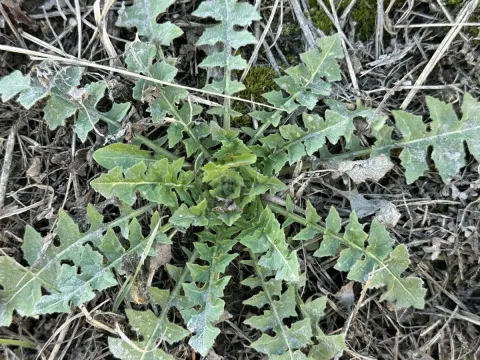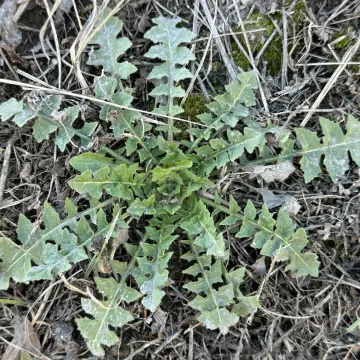
Flixweed (Loesel's hedge mustard)
Sisymbrium loeselii L.
Description
Loesel's hedge mustard (Sisymbrium loeselii L.) is a herbaceous plant belonging to the Brassicaceae family. While often categorized as a problematic weed in commercial agriculture, it exhibits remarkable biological resilience and growth patterns that allow it to colonize diverse landscapes with significant efficiency.
Originating from Eurasia, the species has successfully naturalized across various temperate zones worldwide. It thrives in disturbed habitats, field margins, and neglected pastures. Its presence in agricultural fields often poses a threat to yield potential, as the weed competes directly with primary crops for soil moisture and mineral nutrients throughout the growing season.
Botanically, the plant is characterized by an erect, branched stem that can reach up to one meter in height. Its yellow inflorescences form dense clusters that produce elongated siliques. The seeds are small, numerous, and possess high dormancy, allowing the plant to persist in the soil seed bank for several years under unfavorable conditions.
Environmental requirements are relatively low, as the plant is highly tolerant to heat and drought. It grows well in various soil textures, from fertile loams to sandy or alkaline substrates. Effective weed management in fields requires a combination of mechanical techniques like harrowing, crop rotation, and the application of selective herbicides during the early growth stages.
Beyond its status as a weed, the plant acts as a host for various agricultural pests, including flea beetles and aphids, which can migrate to valuable oilseed crops.
- Rapid life cycle with high seed production
- High adaptability to various soil compositions
- Role as a vector for cruciferous diseases
Photo gallery