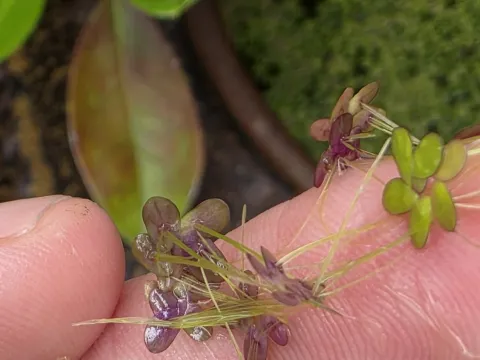

Spirodela punctata
Spirodela punctata
Description
Spirodela punctata, also known as dotted duckweed, is a perennial aquatic plant belonging to the Araceae family. Due to its exceptional reproductive rate and nutritional density, it has gained attention as a sustainable crop for industrial-scale biomass production in water-based farming systems.
Originating from tropical and subtropical climates, this species has naturalized globally across various freshwater environments. Its ability to thrive in nutrient-rich conditions allows it to occupy niche ecosystems, ranging from agricultural ponds to controlled indoor aquaculture tanks.
Morphologically, the plant consists of flattened fronds floating on the water surface, characterized by a distinct purple underside. Its root system is more robust than that of smaller duckweed species (Lemna), allowing for efficient nutrient uptake from the water column, which contributes to its rapid growth.
Cultivation requirements include a consistent water temperature, typically between 20°C and 30°C, and an abundance of nitrogen and phosphorus. Unlike traditional terrestrial crops, this plant does not require soil, but it does demand careful monitoring of water quality to prevent competitive algal blooms.
In agricultural practice, this species is primarily used as a high-protein supplement for livestock, poultry, and fish farming. Furthermore, it plays a vital role in phytoremediation, as the plants efficiently absorb excess nutrients from agricultural runoff, preventing water pollution and maintaining a balanced ecosystem.
- High protein content and essential amino acid profile.
- Rapid biomass doubling time under optimal light conditions.
- Effective natural water filtration and nutrient recycling.
- Low susceptibility to major pests due to the aquatic habitat.
Photo gallery