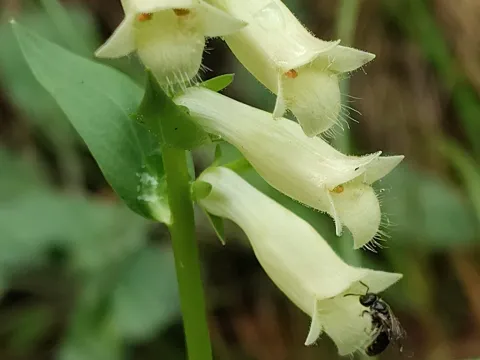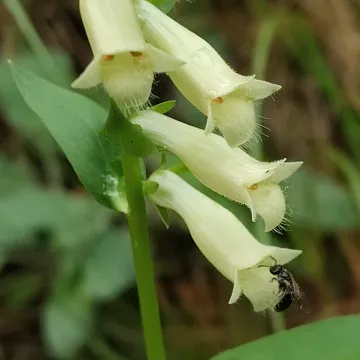
Straw foxglove
Digitalis lutea L.
Description
Straw foxglove (Latin Digitalis lutea L.) is a perennial herbaceous plant belonging to the Plantaginaceae family. It is widely recognized in professional botany and agriculture for its unique chemical properties and its role as a source of medicinal compounds.
The plant originates from Western and Central Europe, where it typically thrives in woodland habitats and mountainous areas. Its natural distribution demonstrates an evolutionary adaptation to cool, temperate climates, allowing it to be cultivated successfully in regions with varied moisture levels.
Botanically, it features slender, upright stems typically reaching 50 to 80 cm in height. The foliage is lanceolate and arranged spirally. The most distinctive feature is the terminal raceme of small, pale yellow, tubular flowers, which appear in late spring and throughout the summer months.
Agronomic requirements are centered on soil quality and moisture management. The crop performs best in well-drained, humus-rich soil with a neutral or slightly acidic pH. Cultivation practices should include regular weeding and the application of balanced fertilizers to ensure robust leaf production for harvest.
Economically, straw foxglove is harvested for its cardiac glycoside content, which serves as a pharmaceutical ingredient. Typical agricultural threats include fungal diseases like powdery mildew and pests such as aphids or slugs. Effective management involves integrated pest control and maintaining proper plant spacing to ensure adequate airflow.
Photo gallery