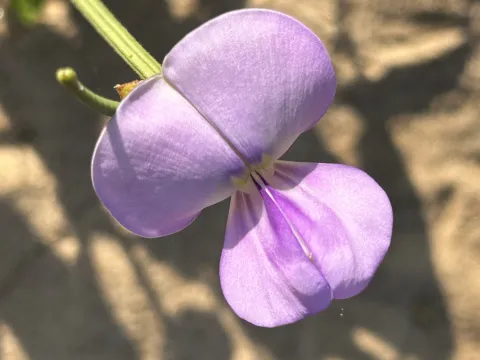

Cowpea
Vigna unguiculata (L.) Walp.
Description
Cowpea (Latin: Vigna unguiculata (L.) Walp.) is a vital herbaceous annual plant belonging to the Fabaceae family. It is one of the most significant grain legumes in the tropical and subtropical regions of the world, serving as a primary protein source for millions of people and a critical component of livestock feed.
The origin of cowpea is traced back to West Africa, where it has been domesticated for thousands of years. From there, it spread to Asia, the Americas, and Southern Europe. It is exceptionally well-adapted to hot, dry environments, making it a "climate-resilient" crop that performs well in regions where other legumes might struggle with moisture stress.
Botanically, the cowpea plant possesses a deep taproot system, which contributes to its drought tolerance. Its growth habit varies from erect (bushy) to trailing (vining) types. The leaves are trifoliate, and the flowers are typically white, yellow, or purple. The most distinctive feature is the elongated pod, which can grow up to a meter long and houses several protein-rich seeds.
The agronomic requirements for cowpea are relatively specific regarding temperature and soil. It thrives in warm climates, requiring temperatures between 20°C and 35°C for optimal growth. It is highly sensitive to frost. While it can grow in a variety of soil types, it prefers well-drained, sandy loam soils with a pH ranging from 5.5 to 6.5. Proper crop rotation is recommended to maintain soil health.
Cowpeas are utilized for human consumption as green pods, fresh seeds, or dried beans. In agriculture, they are highly valued for their nitrogen-fixing capabilities, which improve soil fertility. Farmers must remain vigilant against various pests and diseases, such as aphids, thrips, cowpea curculio, and fungal diseases like root rot and anthracnose, which are common under humid conditions.
Photo gallery