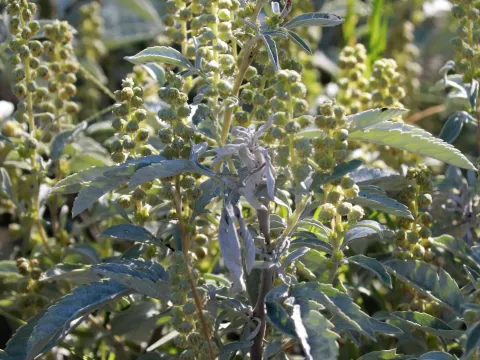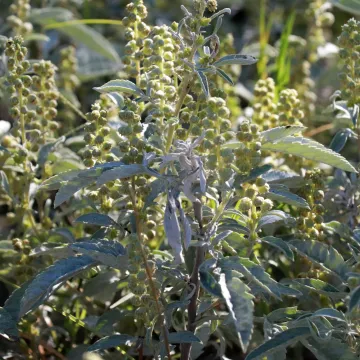
Ambrosia grayi
Ambrosia grayi (A. Nelson) Shinners
Description
Ambrosia grayi (Gray's ragweed) is a persistent perennial herbaceous plant belonging to the Asteraceae family. Unlike common ragweed, which is an annual, this species is characterized by its rhizomatous growth habit, making it a highly resilient and difficult-to-eradicate weed in agricultural landscapes.
The native range of this species is North America, particularly the central and western regions. As an invasive plant, it has expanded into various habitats, often colonizing disturbed ground, riverbanks, and agricultural fields, where it acts as a significant competitor for water and soil nutrients.
Botanically, the plant is distinguished by its deep-seated, extensive root system and upright stems that bear pinnately lobed leaves. This structural design enables the plant to store significant reserves of energy underground, ensuring rapid regrowth after mechanical disturbance or mowing, which complicates traditional weeding efforts.
Ambrosia grayi thrives in a variety of soil types, showing a high tolerance for different moisture levels and soil compositions. It is particularly competitive in full-sun environments. Its biological ability to produce secondary metabolites often creates allelopathic effects, further suppressing the growth of neighboring crop plants.
Effective management strategies for this species in farming operations include:
- Implementing a long-term strategy of tillage to deplete root carbohydrate reserves.
- Applying systemic post-emergence herbicides that can translocate into the rhizomes.
- Integrating competitive cover crops to shade out the weed and reduce its photosynthetic potential.
- Maintaining strict sanitation protocols to prevent the spread of root fragments via farm machinery.
Photo gallery