Annual fleabane
Erigeron annuus (L.) Pers.
Description
Annual fleabane (Erigeron annuus (L.) Pers.) is a herbaceous plant belonging to the Asteraceae family. While frequently categorized as a common weed in agricultural fields and pastures, it is a highly resilient botanical species that adapts efficiently to various environments across the globe.
Originating from North America, the species has naturalized in many regions, including Europe and parts of Asia. It thrives in diverse habitats, ranging from well-cultivated farmland and meadows to roadsides and urban waste areas, often acting as a pioneer species in disturbed soils.
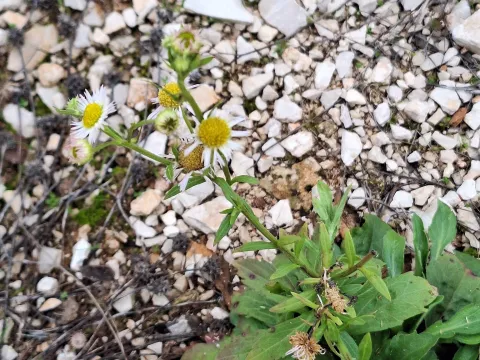
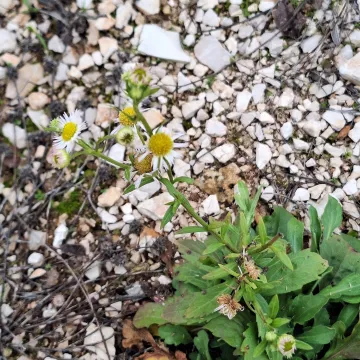
The plant typically features a branched stem reaching heights of up to 120 centimeters. Its foliage is alternate, and its flower heads resemble small daisies with white or pale violet ray florets and yellow disk florets. These flowers bloom from early summer well into the autumn, producing thousands of wind-dispersed seeds.
In terms of agricultural management, annual fleabane requires consistent attention due to its aggressive colonization habits. It prefers sunny locations and tolerates a wide range of soil textures. Effective control strategies include mechanical weeding before flowering, competitive crop planting, and the use of targeted herbicides to prevent rapid seed dispersal.
Economically, the plant is primarily viewed as a pest that competes with crops for nutrients and moisture. However, it holds some value as a late-season nectar source for pollinators, including bees and butterflies. Scientific interest in the species also focuses on its allelopathic properties, which may inhibit the growth of neighboring plants.
- Family: Asteraceae.
- Life Cycle: Annual or biennial herb.
- Flowering Season: June – October.
- Reproduction: Prolific seed production (wind dispersal).
- Agricultural Status: Invasive weed.
Photo gallery