Seaside fleabane
Erigeron glaucus Ker-Gawl.
Description
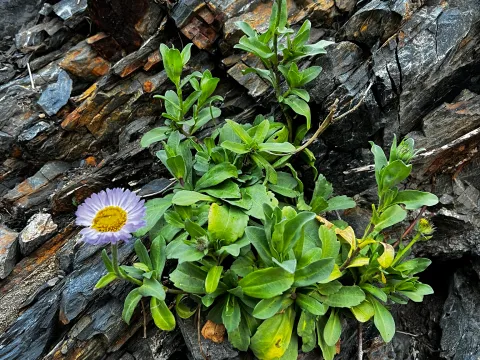
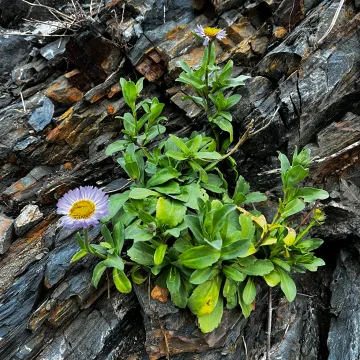
Seaside fleabane (Erigeron glaucus) is a perennial flowering plant belonging to the Asteraceae family. Known for its charming daisy-like flowers and compact, mounding growth habit, it is a popular choice for rock gardens and coastal landscapes across temperate regions.
Native to the Pacific coastline of North America, from Oregon to California, this plant has evolved to thrive in harsh maritime environments. Its natural habitat includes rocky cliffs and coastal bluffs, which contributes to its reputation as a hardy species capable of tolerating salty breezes and poor, sandy soils.
Botanically, it features thick, succulent-like grey-green leaves that form a low basal rosette. The plant typically reaches a height of 6 to 12 inches. It produces showy flower heads with lavender or violet ray florets and yellow central disks, which bloom from late spring through early summer, providing a significant splash of color.
Agronomic requirements are centered on excellent drainage. The plant is highly susceptible to root rot if grown in heavy or waterlogged soils. It performs best in full sun and thrives in sandy or gravelly substrates that mimic its native coastal environment. Minimal fertilization is required, as the plant is adapted to low-nutrient soils.
- Planting density: 12-15 inches apart for good airflow.
- Watering: Moderate, allowing soil to dry between sessions.
- Pruning: Deadheading spent blooms to encourage potential re-blooming.
The primary use of Erigeron glaucus is ornamental, serving as an excellent ground cover or edging plant. Regarding pests and diseases, gardeners should monitor for aphids and ensure good spacing to prevent outbreaks of powdery mildew, especially in humid or poorly ventilated garden locations.
Photo gallery