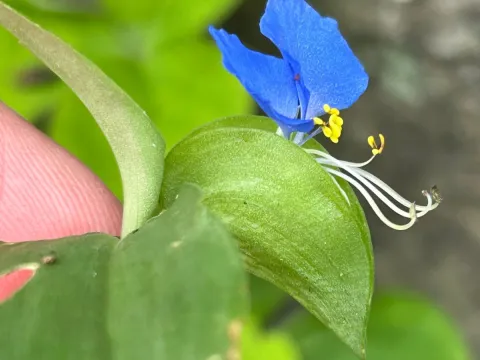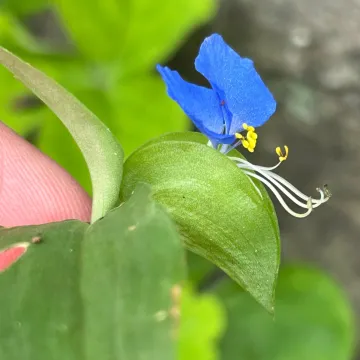

Asiatic dayflower
Commelina communis L.
Description
The Asiatic dayflower (Commelina communis L.) is an annual herbaceous plant belonging to the Commelinaceae family. In agricultural settings, it is often managed as a weed due to its rapid growth, yet it has recognized applications as a forage plant and a traditional medicinal botanical.
The plant originates from East Asia and has established a global presence in temperate regions. It thrives in humid environments, including paddy fields, riverbanks, and moist agricultural soils. Its ability to colonize disturbed areas makes it a prominent species in many rural and managed landscapes.
Botanically, the species is identified by its distinctive blue flowers with three petals and fleshy, alternate leaves. The stem is succulent and capable of rooting at the nodes, which significantly enhances its capacity for both sexual reproduction via seeds and vegetative expansion, making it difficult to control mechanically.
Cultivation requirements necessitate high soil moisture and rich, loamy textures. For effective management in agriculture, it is essential to monitor soil drainage. If grown intentionally for secondary purposes, it requires ample space to prevent over-competition with primary crops due to its aggressive growth pattern.
Economic uses of the Asiatic dayflower include:
- Utilized as a supplement in animal feed for poultry and livestock.
- Incorporation in traditional medicine for its anti-inflammatory properties.
- Occasional use in aesthetic landscaping for shaded, damp garden areas.
- Evaluation as a source for plant-derived secondary metabolites in pharmaceutical research.
Typical plant health issues involve fungal pathogens such as leaf spot diseases, which flourish in high-humidity conditions. Common pests include aphids and spider mites, which can drain nutrients from the succulent foliage. Integrated pest management, focusing on sanitation and moisture regulation, is the standard approach for controlling infestations.
Photo gallery