
Commelina benghalensis
Commelina benghalensis L.
Description
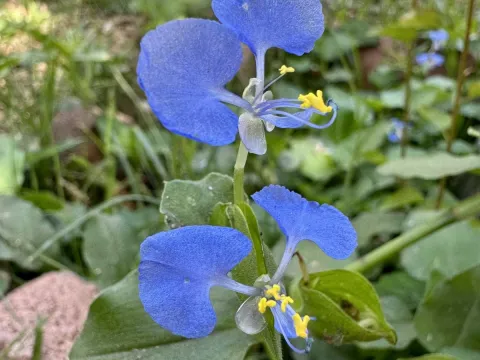
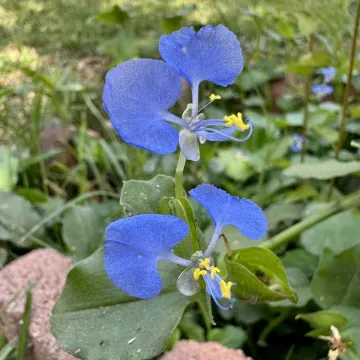
Commelina benghalensis, commonly known as the Bengal dayflower, is an annual herbaceous plant belonging to the Commelinaceae family. While often categorized as a persistent and difficult-to-control agricultural weed in tropical and subtropical climates, it is also utilized for its edible leaves and as forage in specific subsistence farming systems.
Originating from the tropical regions of Asia and Africa, this plant has successfully naturalized across various continents. Its rapid spread is primarily due to its aggressive growth habits and effective reproductive strategies. In many countries, it is classified as a significant weed that disrupts the production of major crops like soybean, corn, and cotton.
The plant exhibits unique botanical features, most notably the production of both aerial and underground flowers. The underground flowers are cleistogamous, meaning they self-pollinate without opening, ensuring high seed production regardless of pollinators or external conditions. This trait makes the plant extremely resilient and difficult to eradicate from cultivated fields.
Regarding cultivation and environmental requirements, the plant thrives in warm, humid conditions and prefers fertile, moist soils. Its management in agricultural settings requires a multi-faceted approach. Mechanical control is frequently ineffective because any stem node left in the soil can generate a new plant. Consequently, chemical control with systemic herbicides combined with strict field hygiene is often necessary.
Economically, the species serves as a source of local nutrition, as its succulent leaves are rich in vitamins and minerals when cooked. However, in modern commercial agriculture, the focus remains on mitigating its negative impact. It is susceptible to various rust fungi and leaf-spot diseases, but its robust nature allows it to recover quickly from environmental stress, highlighting the importance of integrated pest management strategies.
- Aggressive vegetative propagation
- Cleistogamous flowering mechanism
- High adaptability to various soil types
- Edible leaves with nutritional value
- High competitive index in crop fields
Photo gallery