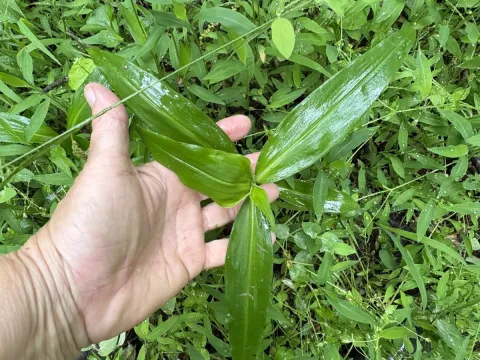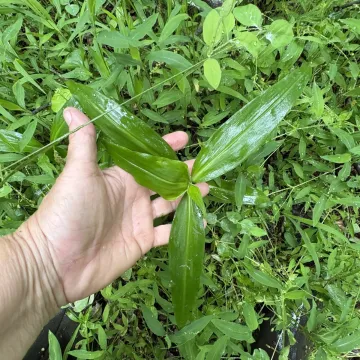
Virginia dayflower
Commelina virginica L.
Description
The Virginia dayflower (Commelina virginica L.) is a robust perennial herb belonging to the Commelinaceae family. Widely recognized for its distinct blue flowers and ease of cultivation, this species serves as both a botanical interest and a valuable component in naturalistic garden designs, particularly in wetland or moist garden zones.
Native to North America, the plant is primarily found in the eastern and southern United States. Its natural habitat includes damp forests, riverbanks, and swamp edges, which dictates its high water requirements. Because of its native distribution, it is well-suited to humid temperate climates, provided the soil remains consistently moist throughout the growing season.
Botanically, the Virginia dayflower is characterized by its succulent stems and lanceolate foliage. The plant's most striking feature is its inflorescence, typically consisting of three-petaled blue flowers that emerge from a specialized folded bract. These blooms are ephemeral, usually lasting only a day, yet the plant produces them in rapid succession, maintaining a decorative appearance.
Cultivation requires rich, well-draining soil with an abundance of organic matter. While the species tolerates full sun in northern ranges, it generally prefers partial shade to avoid heat stress. It is a moisture-loving plant, making it an excellent choice for rain gardens or areas with poor drainage where other species might struggle. Consistent moisture is the key to maintaining healthy foliage and continuous blooming.
- Average height: 50–90 cm.
- Growth habit: Spreading through rhizomes and self-seeding.
- Preferred light: Partial shade to dappled sunlight.
- Hardiness: Adapted to USDA zones 6–9.
Regarding health management, the Virginia dayflower is generally resilient, though it can be susceptible to pests such as slugs and snails, which target tender new leaves. Fungal issues like leaf spot or powdery mildew can occur if the planting density is too high or air circulation is poor. Proper thinning and sanitation practices are essential to keep the planting healthy and to manage its natural vigor effectively.
Photo gallery