Spreading orache
Atriplex patula L.
Description
Spreading orache (Atriplex patula L.) is an annual herbaceous plant belonging to the Amaranthaceae family. While it is commonly categorized as an agricultural weed, it possesses unique physiological adaptations that allow it to thrive in diverse environments, often outcompeting traditional crops for essential nutrients and sunlight.
The origin of the species is linked to the temperate regions of Eurasia and North America. It is a highly successful colonizer of disturbed habitats, including arable land, roadsides, and coastal salt marshes, demonstrating a remarkable ability to adapt to varying degrees of soil salinity and moisture levels.
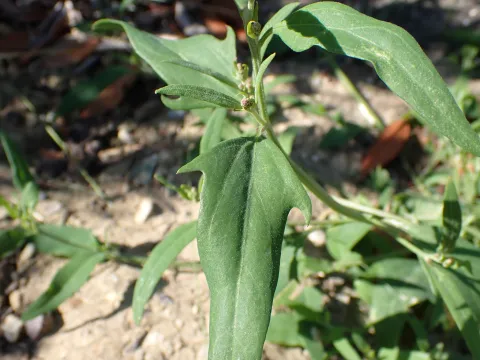
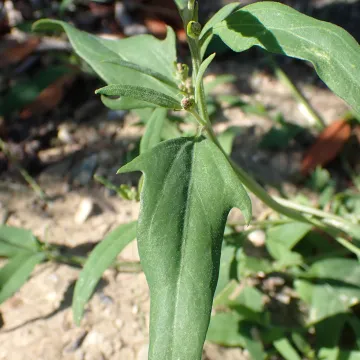
Botanically, Atriplex patula is characterized by its distinctively arrow-shaped (hastate) leaves and a branched, upright to sprawling stem structure. It exhibits C3 photosynthesis and is known for producing a vast number of seeds, which are dispersed by wind and water, ensuring the species' long-term survival in varied crop rotations.
Regarding cultivation and soil requirements, the plant is remarkably robust, favoring nitrogen-rich soils and effectively utilizing degraded agricultural lands. Successful management requires an integrated approach, involving mechanical tillage, strict weed-free seed sourcing, and the strategic application of selective herbicides during the early stages of crop development.
Historically and in some contemporary practices, spreading orache has been used as a supplementary forage crop, particularly in arid or saline regions where traditional forage crops struggle to survive. Despite its utility, it remains susceptible to various pests, including leaf miners and aphids, which can act as vectors for secondary plant diseases within an agricultural ecosystem.
Photo gallery