Giant saltbush
Atriplex nummularia Lindl.
Description
Giant saltbush (Atriplex nummularia Lindl.) is a perennial evergreen shrub belonging to the Amaranthaceae family. It is widely recognized in agriculture for its exceptional tolerance to extreme environmental conditions, serving as a critical forage resource in arid and semi-arid environments where traditional fodder crops fail to thrive.
Native to Australia, this plant has been introduced to various regions across the globe, including parts of the Middle East, North Africa, and the Americas. Its natural range encompasses vast arid plains where it has adapted to survive in harsh conditions characterized by long periods of drought and high temperatures.
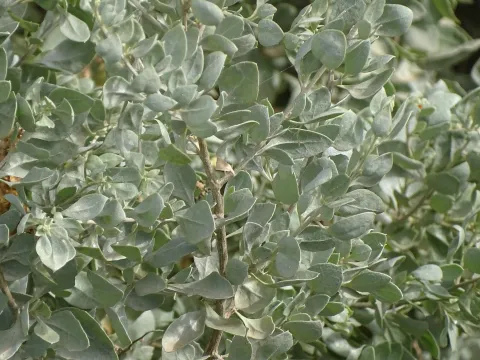
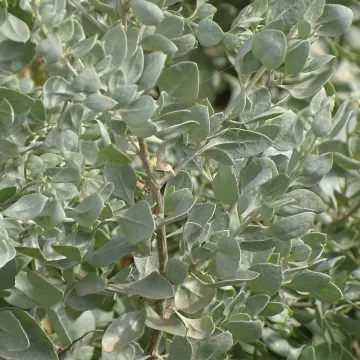
The plant is characterized by its silvery-grey, circular leaves that are equipped with specialized bladder hairs to manage salt excretion and water storage. It can grow up to 3 meters in height, developing a robust root system that enables it to thrive in saline soils with very low nutritional profiles, making it a true champion of halophytic botany.
Agronomic requirements for Giant saltbush are relatively low once the plants are established. It prefers well-drained soils and is highly resilient to soil salinity and sodicity. Propagation is usually achieved through direct seeding or transplanting seedlings. Minimal maintenance is required, though controlled grazing management is essential to prevent overgrazing and ensure the long-term productivity of the stand.
Economically, the crop is primarily utilized as a drought-reserve forage for sheep, goats, and cattle, providing essential nutrients when other feed sources are scarce. Beyond its feeding value, it serves significant environmental purposes, such as soil stabilization, erosion control, and the remediation of saline lands. While robust, the plant can occasionally suffer from infestations of locusts or fungal pathogens under conditions of excessive, stagnant humidity.
Photo gallery