Bigelow's sneezeweed
Helenium bigelovii Torr. & A. Gray
Description
Bigelow's sneezeweed (Helenium bigelovii) is a herbaceous perennial plant belonging to the Asteraceae family. This species is highly regarded in horticultural circles for its architectural presence and bright, daisy-like blossoms. As a member of the sneezeweed genus, it is adapted to specific ecological niches, primarily preferring areas with moisture-retentive soils.
The native range of this plant encompasses western North America, particularly coastal and mountain regions of California and Oregon. It naturally thrives in riparian zones, wet meadows, and alongside streams. This evolutionary background explains its preference for consistent soil moisture and its relative tolerance for cooler, misty conditions typical of its home environment.
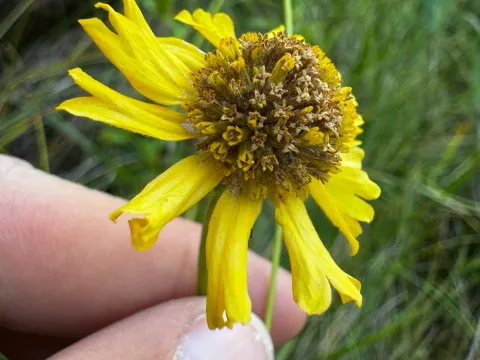
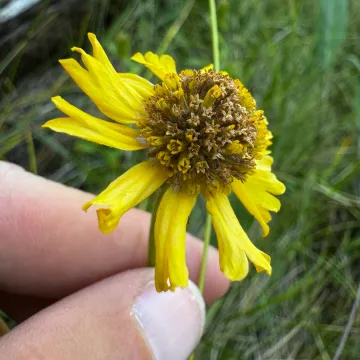
Botanically, the plant is characterized by sturdy, upright stems that can reach heights of up to one meter. The leaves are lance-shaped and arranged alternately along the stem. The inflorescences are distinct, featuring a prominent, darker central disk surrounded by ray florets that vary in shades of yellow and gold. The plant exhibits a vigorous root system, making it suitable for establishing long-term perennial beds.
Cultivation requirements involve full sun exposure and rich, loamy soil with excellent drainage. In agricultural or garden practice, it is crucial to maintain moisture levels throughout the growing season, as the plant is not drought-tolerant. Periodic fertilization with balanced compost in the early spring promotes robust foliage development and a more prolific blooming cycle during late summer.
The primary use for Bigelow's sneezeweed is in ornamental horticulture and landscape design, specifically for borders, pollinator gardens, and restoration projects. To maintain plant health, gardeners should be vigilant against common issues such as fungal pathogens, including powdery mildew, which can arise if air circulation is poor. Controlling aphid infestations and monitoring for nematode damage in the root zone are also essential components of a standard integrated pest management program.
Photo gallery