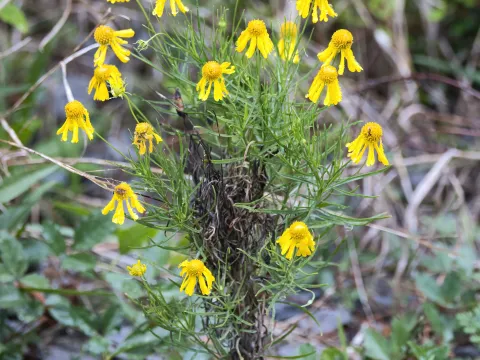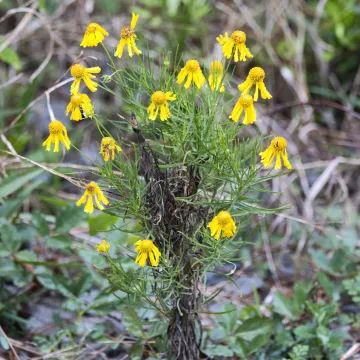
Bitter sneezeweed
Helenium amarum (Raf.) H. Rock
Description
Bitter sneezeweed (Helenium amarum) is an annual herbaceous plant belonging to the Asteraceae family. It is widely recognized for its vibrant yellow flowers and its natural resilience. The common name refers to the bitter, acrid taste of the foliage, which serves as a potent deterrent against many herbivores and pests, making it a robust addition to any field or garden setting.
The plant is native to the southern and central regions of North America, where it naturally thrives in open fields, prairies, and disturbed soils. Due to its adaptability, it has spread throughout various temperate and subtropical regions globally, often being integrated into landscape management and ornamental crop production programs.
Botanically, this species is characterized by its slender, branched stems covered in narrow, linear leaves. The inflorescence consists of numerous daisy-like flower heads with golden-yellow petals and a darker, dome-shaped central disc. The plant typically reaches a height of 20 to 60 centimeters, forming compact, bushy clusters that bloom extensively throughout the summer months.
Cultivation requirements are relatively straightforward. Bitter sneezeweed thrives in full sun exposure and prefers well-drained, nutrient-poor, or sandy soils, mimicking its natural prairie habitat. It is highly drought-tolerant, reducing the need for intensive irrigation. Essential agricultural practices involve ensuring proper seed spacing and maintaining adequate soil drainage to promote healthy root establishment.
- Requires full solar exposure for optimal flowering.
- Well-suited for xeriscaping and sustainable meadow restoration.
- Highly resistant to most garden pests due to chemical compounds in leaves.
- Excellent nectar source for native pollinators and honeybees.
In terms of agricultural and commercial use, the plant is valued for its low-maintenance ornamental quality and ecological benefits. While it is generally free from major diseases, gardeners should monitor for signs of fungal issues in overly humid conditions. By maintaining appropriate spacing and good air circulation, growers can easily minimize potential risks and ensure a successful crop season.
Photo gallery