Common sneezeweed
Helenium autumnale L.
Description
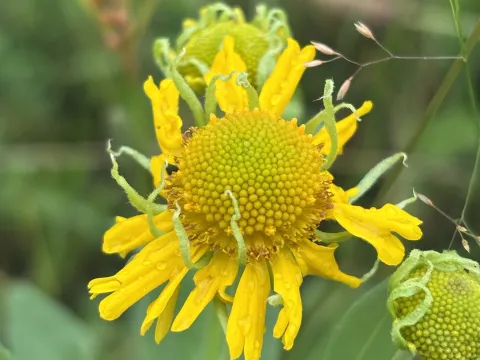
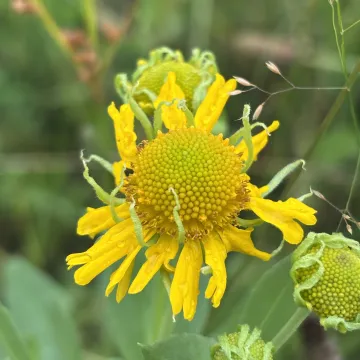
Common sneezeweed (Helenium autumnale L.) is a perennial herbaceous plant belonging to the Asteraceae family. This species is widely recognized for its robust growth habit and vibrant yellow-to-bronze flowers that provide crucial late-season color to landscapes and agricultural flower borders.
The plant is native to North America, where it thrives in moist meadows, riparian zones, and floodplains. Its range has expanded significantly due to its adaptability to various temperate climates. In cultivation, it is valued for its resilience and ability to establish dense stands that stabilize soil and provide habitat for local pollinators.
Botanically, it features tall, branched stems reaching heights of up to 1.5 meters. The leaves are alternate and lanceolate, often with serrated margins. The inflorescences consist of disc-like centers surrounded by drooping rays. The root system is fibrous and rhizomatous, allowing the plant to spread horizontally over time if not managed through division.
Successful cultivation requires full sun exposure and consistently moist, nutrient-rich soils. While it can tolerate a wide variety of soil pH levels, it performs best in loamy, well-drained environments. Routine agronomic practices include mulching to retain moisture during the summer months and deadheading spent blooms to encourage secondary flowering or to prevent unwanted self-seeding.
In addition to ornamental use, this plant is an excellent choice for restoration projects and pollinator gardens due to its high nectar production. When grown on a larger scale, it requires attention to common pathogens such as powdery mildew, which often appears in stagnant, humid air. Integrated pest management, including proper plant spacing and organic fungicide application, is essential for maintaining plant health.
Photo gallery