Bituminaria bituminosa
Bituminaria bituminosa (L.) C. H. Stirt. var. albomarginata P. Méndez et al.
Description
Bituminaria bituminosa, commonly known as pitch trefoil, is a perennial legume species belonging to the Fabaceae family. It is distinctively recognized by the strong bitumen-like scent produced by its foliage, which contains various secondary metabolites including furanocoumarins. In agricultural settings, it is being studied as a robust source of fodder, particularly in regions where environmental stress limits the growth of traditional forage crops.
The plant originates from the Mediterranean basin, including the Canary Islands where the specific variety var. albomarginata is found. It has evolved to thrive in semi-arid environments with poor soil conditions. This makes it an ideal candidate for soil stabilization and reclamation efforts, as well as an alternative forage crop for dryland farming systems where irrigation water is scarce or unavailable.
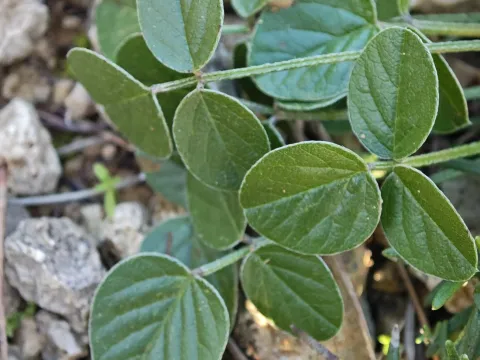
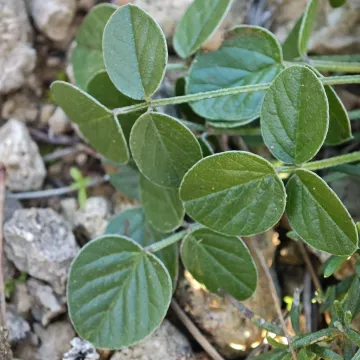
Botanically, the plant is a subshrub with a strong, deep taproot system. The leaves are trifoliate, and the flowers are usually organized in dense, blue-violet heads. The albomarginata variety is noted for its distinctive white-margined leaves. The plant exhibits high genetic diversity, which allows it to adapt to varying degrees of salinity and alkalinity in the soil, providing resilience in unpredictable climates.
Cultivation requirements for Bituminaria bituminosa are relatively modest. It prefers well-drained, lime-rich soils and full sunlight. Agronomic management involves site preparation and potentially scarifying seeds before planting to ensure uniform germination. Once established, the crop is highly drought-tolerant and requires minimal nitrogen input, thanks to its effective nitrogen-fixing symbiosis with rhizobia bacteria in the root nodules.
In terms of хозяйственное usage, the crop is primarily utilized for livestock grazing and green manure production. Its high protein content makes it nutritious for ruminants. Potential pests include various species of weevils and leaf beetles that feed on Fabaceae, while diseases such as root rot can occur if soil drainage is insufficient.
- High protein content for forage.
- Excellent nitrogen-fixing capabilities.
- High drought and heat tolerance.
Photo gallery