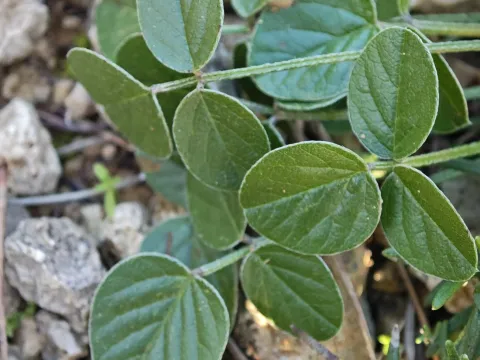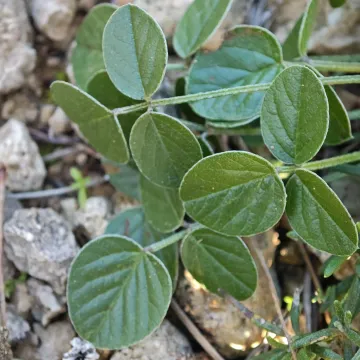
Pitch trefoil
Bituminaria bituminosa (L.) C. H. Stirt. var. crassiuscula P. Méndez et al. et al.
Description
Pitch trefoil (lat. Bituminaria bituminosa), also known as Syrian oregano or Bituminaria, is a perennial legume species belonging to the Fabaceae family. It is distinct for its strong, resinous, tar-like odor when crushed, which is derived from the high concentration of essential oils in its foliage. This plant is recognized as a resilient forage resource in arid and semi-arid environments.
The plant is native to the Mediterranean basin, spanning from Southern Europe to Northern Africa and Western Asia. It typically thrives in rocky, nutrient-poor soils where other crops struggle to survive. Its ability to colonize degraded landscapes makes it a critical plant for ecological restoration and sustainable land management in Mediterranean-type climates.
Botanically, Pitch trefoil is a robust herbaceous shrub that can grow up to 1 meter in height. It features trifoliate leaves and produces clusters of pea-like flowers. Its extensive, deep-reaching root system is an evolutionary adaptation that ensures survival during the hot, dry summer months and plays a vital role in soil stabilization.
For successful cultivation, the plant requires well-drained, alkaline or neutral soils and full sun exposure. It is highly drought-tolerant once established and does not require intensive fertilization due to its nitrogen-fixing capabilities. Propagation is primarily via seeds, which often benefit from scarification to improve germination rates in field conditions.
Agricultural and economic uses of the crop include:
- Providing high-protein grazing material for livestock during drought seasons.
- Preventing soil erosion through deep root anchoring on slopes.
- Utilization as a source of phytochemicals for potential pharmaceutical applications.
The crop is generally hardy and resistant to most common agricultural pests due to its resinous compounds. However, fungal diseases such as leaf spots can occur if the plants are subjected to waterlogged conditions or poor air circulation. Implementing appropriate plant spacing and ensuring good soil drainage are the primary methods for preventing such biological stressors.
Photo gallery