Balsam poplar
Populus balsamifera L. subsp. trichocarpa (Torr. & A. Gray) Brayshaw
Description
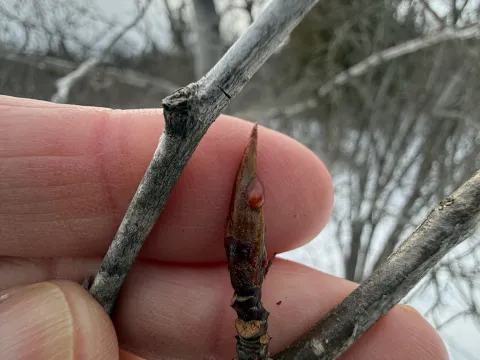
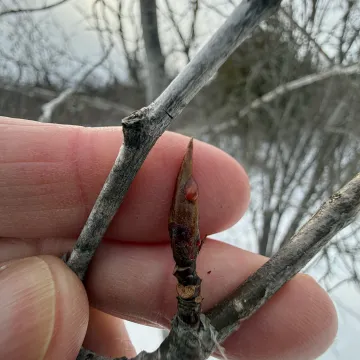
The Balsam poplar (Populus balsamifera L. subsp. trichocarpa) is a fast-growing deciduous tree belonging to the Salicaceae family. Renowned for its rapid biomass accumulation and resilience, this species is a staple in temperate forestry and shelterbelt management. The tree is famously recognized for the resinous, aromatic exudate from its buds, which has been used historically for its medicinal properties.
Native to North America, the Balsam poplar has been widely naturalized across various temperate regions globally. Its ability to thrive in diverse habitats—from riparian zones to open agricultural fields—makes it a highly versatile crop. In industrial forestry, it is frequently utilized for its high-quality timber and as a sustainable source of cellulose fiber for the paper industry.
Botanically, the tree features an upright growth habit with serrate, ovate leaves that often show a silvery underside. Its bark transitions from smooth and light-colored in youth to deeply furrowed and greyish-brown at maturity. The species is dioecious, and in appropriate growing conditions, it can reach impressive heights within a few decades, outperforming many other hardwood species in growth rates.
Agricultural success depends on providing deep, moist, and nutrient-rich alluvial soils. While the Balsam poplar is moisture-tolerant, it requires good drainage to avoid root rot. Cultivation practices include establishing plantations with optimal spacing to maximize sunlight penetration and airflow. Vegetative propagation via dormant cuttings is the standard industry practice, ensuring genetic consistency across large plantation blocks.
Regarding pest and disease management, the species is susceptible to various rust fungi (Melampsora spp.) and canker-causing pathogens that affect trunk integrity. Management strategies involve planting resistant clones and maintaining high site hygiene. Common insect pests include the poplar leaf beetle and wood-boring moths, which are typically managed through biological control methods or selective applications of environmentally safe pesticides when infestation thresholds are exceeded.
Photo gallery