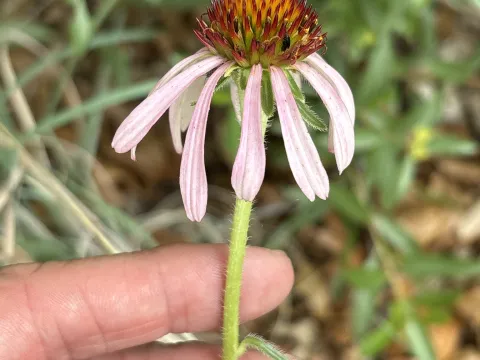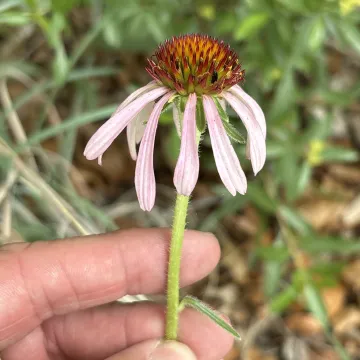
Narrow-leaf coneflower
Echinacea angustifolia DC.
Description
Narrow-leaf coneflower (Echinacea angustifolia) is a herbaceous perennial plant belonging to the Asteraceae family. This crop is highly valued for its medicinal properties, particularly for the high concentration of echinacosides and alkylamides found primarily in its deep taproots, which are widely used in the pharmaceutical industry.
The native range of this species extends across the prairies and open woodlands of central North America. As an agricultural crop, it has been introduced to various temperate regions worldwide. The plant is well-adapted to habitats with significant temperature fluctuations and is known for its remarkable hardiness in drought-prone environments.
Botanically, the plant is characterized by a stout taproot and slender, erect stems that typically reach a height of 60 cm. The leaves are distinctively narrow and lanceolate, covered in stiff hairs that help reduce water loss. The flowers are solitary heads with purple or pinkish ray florets and a dark, prickly, cone-shaped center, which provides the distinctive appearance of the species.
Cultivation of Echinacea angustifolia requires careful soil preparation. The plant thrives in well-drained, fertile, neutral to slightly alkaline soils. It is highly intolerant of waterlogged conditions, which can lead to root rot. Successful production involves spacing plants properly to ensure adequate airflow and sunlight penetration, which is vital for reducing fungal disease pressure.
Economically, narrow-leaf coneflower is cultivated for the production of herbal supplements, tinctures, and specialized pharmaceutical extracts. Beyond its clinical applications, it serves as an excellent pollinator-friendly plant, making it a sustainable choice for integrated farming systems. Proper harvesting of roots usually occurs after 3 to 4 years of growth to maximize the concentration of active chemical compounds.
- Excellent drought tolerance once established.
- Susceptibility to Fusarium wilt in poorly drained soils.
- Requires cold stratification for successful seed germination.
Photo gallery