Purple coneflower
Echinacea purpurea (L.) Moench
Description
Purple coneflower (Echinacea purpurea (L.) Moench) is a herbaceous perennial plant belonging to the Asteraceae family. It is widely recognized as a major medicinal crop, valued for its complex chemical composition, including alkamides, caffeic acid derivatives, and polysaccharides used in global pharmacology.
The species is native to the central and eastern regions of North America, where it thrives in prairies and open woodlands. Its adaptability has allowed it to become a staple agricultural crop in various temperate regions across the world, where it is farmed primarily for its medicinal roots and flowering aerial parts.
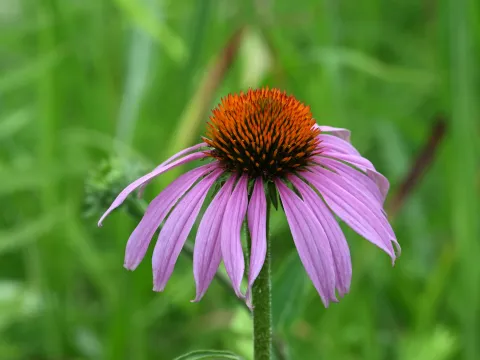
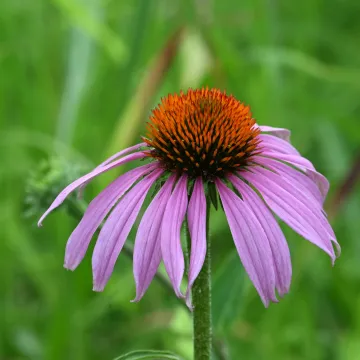
Botanically, it is characterized by sturdy stems that reach up to 1.5 meters in height. The root system is fibrous and deep, which helps the plant endure variable weather conditions. The inflorescences are distinct, featuring large, conical, prickly centers surrounded by drooping purple or pink ray florets, appearing during the summer months.
For successful production, Echinacea requires full sun exposure and well-drained, fertile soil with a neutral pH level. While the crop is relatively drought-tolerant once established, it needs consistent moisture during the seedling stage. Agrotechnical management involves careful weed control during the establishment year and standard mineral fertilization to maximize biomass yield.
The commercial utilization of this crop is diverse and centered on health-promoting products:
- Processing into standardized extracts for immune support supplements.
- Production of herbal teas and infusions.
- Use in cosmetic products for skin care and soothing formulations.
- Ornamental value in large-scale professional landscape installations.
The crop is susceptible to certain pathogens if agricultural conditions are suboptimal. Fungal issues like powdery mildew and root rot are common in poorly drained fields. Pests such as aphids and leaf miners may affect foliage health, necessitating integrated pest management strategies to protect the purity and quality of the medicinal harvest.
Photo gallery