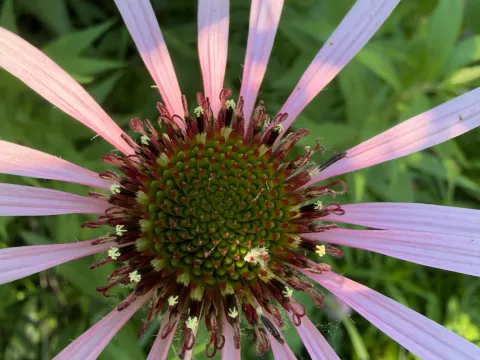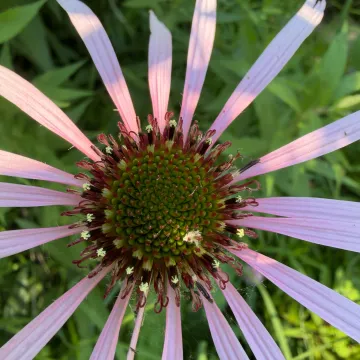
Pale purple coneflower
Echinacea pallida (Nutt.) Nutt.
Description
Pale purple coneflower (Echinacea pallida) is a perennial herbaceous plant belonging to the Asteraceae family. It is a highly valued medicinal crop known for its distinctive narrow, drooping petals and a deep, complex root system that contains active chemical compounds used globally in the supplement and pharmaceutical industry.
The plant is native to the tallgrass prairies of North America. It thrives in open, sunny habitats and has been successfully domesticated for agricultural use in various regions that mimic its natural environmental needs. The plant is prized not only for its medicinal properties but also for its resilience and low maintenance requirements in large-scale field cultivation.
Botanically, Echinacea pallida is characterized by hairy, rigid stems and lanceolate foliage. Its most distinguishing feature is the flower head, which displays light pinkish-white ray florets. The root system is significantly more fibrous and deep-reaching compared to other species of the genus, which contributes to its exceptional drought tolerance once the crop is established.
Cultivation requires well-drained, fertile soil with moderate moisture levels. While the crop is hardy, it does not tolerate waterlogged conditions, which can lead to root rot. Recommended agricultural practices include:
- Stratification of seeds to ensure high germination rates.
- Maintenance of weed-free zones during the first year of growth.
- Harvesting roots only after 3 to 4 years of growth to maximize medicinal potency.
- Regular monitoring for aphid infestations and fungal pathogens.
In terms of economic use, the roots are the primary source of bioactive compounds. The plant is rarely troubled by serious pests if the soil is properly drained. However, agricultural managers should be aware of potential issues like powdery mildew, which can occur if plant spacing is too dense and air circulation is insufficient, necessitating proper field planning and density control.
Photo gallery