Dusky cranesbill
Geranium phaeum L.
Description
Dusky cranesbill (Geranium phaeum) is a perennial herbaceous plant belonging to the Geraniaceae family. Widely recognized for its ability to thrive in deep shade, it is a staple for gardeners looking for low-maintenance foliage and elegant, distinct floral displays.
Originating from Central and Southern Europe, this species is naturally found in woodland environments and mountainous slopes. Its historical distribution has facilitated its adaptation to a wide range of temperate climates, allowing it to remain hardy and vigorous across various gardening zones without requiring winter protection.
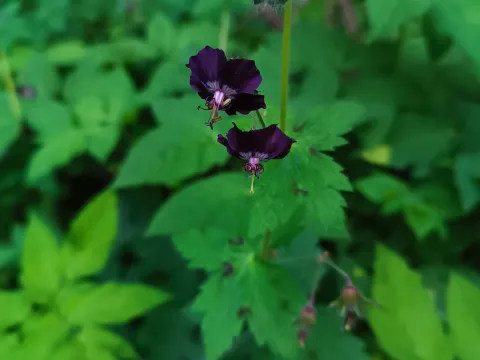
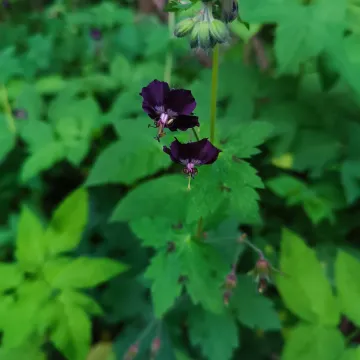
Botanically, the plant forms clumps of basal foliage with palmately lobed leaves. The flowers are particularly notable for their reflexed petals, which range from deep purple and maroon to near-black tones. This unique color profile adds aesthetic value to shaded garden beds where few other plants can bloom effectively.
Cultivation requirements for Geranium phaeum are straightforward: it prefers moist, well-draining soil rich in organic matter. While it is incredibly shade-tolerant, it can handle occasional sunlight if moisture levels are maintained. Propagation is primarily achieved through division of established clumps in early spring or autumn to ensure the plant's long-term health.
The primary use of the dusky cranesbill is decorative, specifically in woodland gardens, under-tree planting, and naturalized meadows. It is highly resistant to most pests and diseases. However, in poorly ventilated or excessively damp conditions, gardeners should monitor for common issues such as:
- Powdery mildew
- Rust fungi
- Root rot caused by poor soil drainage
Photo gallery