Ashy cranesbill
Geranium cinereum Cav.
Description
The ashy cranesbill (Latin Geranium cinereum Cav.) is a perennial herbaceous plant belonging to the Geraniaceae family. Recognized for its low-growing habit and exceptional resilience, this species has become a staple in rock garden horticulture and specialized ornamental plant cultivation due to its aesthetic appeal and drought tolerance.
The plant originates from the mountainous regions of Southern Europe, specifically the Pyrenees and the Balkans. Its native high-altitude habitat has conditioned the plant to thrive in rocky, well-drained soil environments. This evolutionary background makes it an excellent choice for xeriscaping and areas with challenging growing conditions where other species might fail.
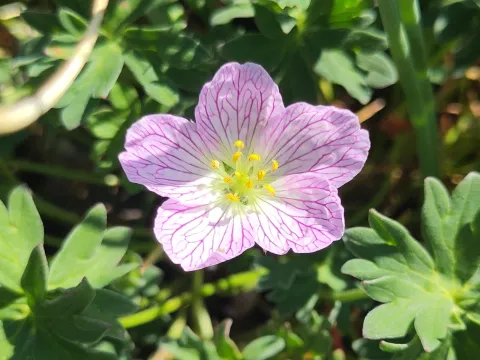
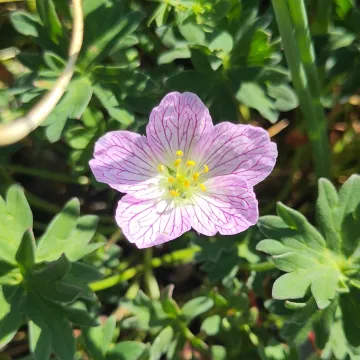
Botanically, Geranium cinereum forms neat, compact mounds of grey-green, lobed leaves covered in fine hairs, which give the foliage its distinct ashen appearance. The flowers are typically bowl-shaped and showcase vibrant veins that draw focus, appearing in various shades ranging from pure white to deep purple and pink throughout the summer season.
Successful cultivation requires a location with full sun and a substrate that provides excellent drainage. The plant prefers neutral to slightly alkaline, gritty soils. Incorporating coarse sand or fine gravel into the planting site is essential to prevent water accumulation around the roots, as moisture retention is a primary factor in preventing plant loss.
Maintenance tasks include the removal of spent flower stems to encourage prolonged blooming and monitoring for common issues. While generally robust, the plant can be susceptible to powdery mildew and root rot in high-humidity climates with poor air circulation. Regular inspection of the foliage and proper spacing are recommended to maintain plant health and vigor.
Photo gallery