Borreria bartlingiana
Borreria bartlingiana
Description
Borreria bartlingiana is a perennial herbaceous plant belonging to the diverse Rubiaceae family. Within botanical taxonomies, it is frequently grouped under the Spermacoce genus. This plant serves as a representative of tropical ecosystems, specifically adapted to thrive in environments characterized by high levels of biodiversity and competitive flora.
The native range of this species is primarily centered in the tropical regions of South and Central America. It commonly inhabits humid savannas, forest edges, and areas where natural vegetation has been disturbed. Due to its biological plasticity, it effectively colonizes a variety of ecological niches, making it a persistent and resilient plant in its native habitats.
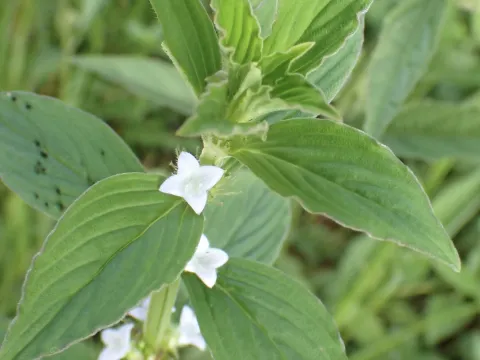
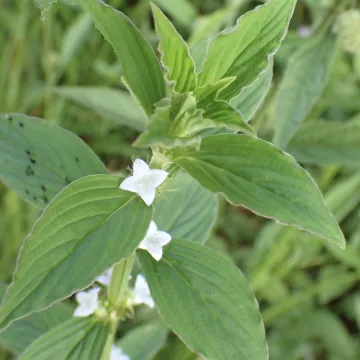
Botanically, the plant exhibits distinctive quadrangular stems and opposite leaves, which are hallmarks of the Rubiaceae family. The flowers are typically small, arranged in compact, dense heads that appear at nodes or stem tips. The root system is sturdy and penetrates deep into the soil, providing stability and access to deep-seated moisture during the dry seasons.
Agricultural requirements include a consistent tropical climate with ample warmth and moderate to high humidity. It thrives in well-drained soils that are slightly acidic. Proper cultivation involves regular weeding, as the plant is susceptible to competition during the early vegetative stage. Monitoring for pests such as sap-sucking insects is essential for maintaining plant health in commercial or research settings.
The economic and research interest in Borreria bartlingiana lies in its phytochemical composition. Local populations have traditionally utilized parts of the plant for various medicinal purposes, including the treatment of inflammatory and bacterial conditions. Scientific inquiry continues to explore the potential of its bioactive compounds for modern pharmaceutical and nutraceutical applications.
- Requires well-drained substrates to prevent root rot.
- Thrives in full sun to partial shade conditions.
- Significant potential in biochemical research.
Photo gallery