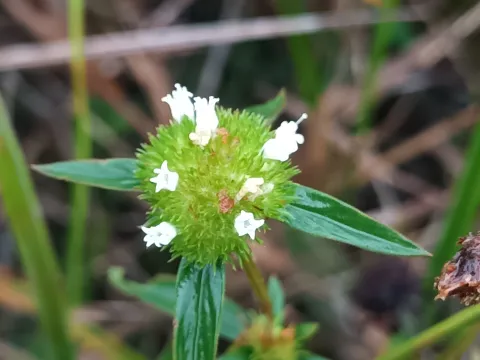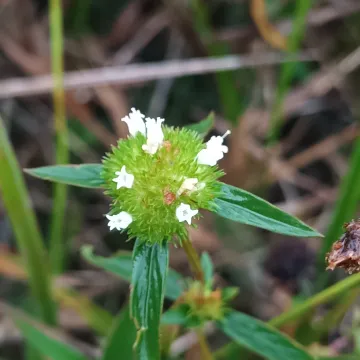
Borreria distans
Borreria distans
Description
Borreria distans is a perennial herbaceous plant belonging to the large Rubiaceae family. While not typically categorized as a high-volume commercial staple crop, it remains a plant of significant interest in tropical agronomy due to its ecological plasticity and its role in local vegetation systems.
The native range of this species is primarily focused on the tropical regions of South America, with a strong presence in Brazil. It has evolved to thrive in humid and sub-humid environments. Because of this, it is frequently studied for its ability to stabilize soils and maintain ground cover in challenging tropical climates, making it a candidate for sustainable land management.
Botanically, the plant is characterized by its opposite, often lanceolate leaves and terminal inflorescences composed of small, delicate flowers. The stem structure is highly branched, allowing the plant to form dense mats that effectively suppress weed growth. Its root architecture is designed to capture nutrients efficiently from the topsoil, reflecting its adaptation to nutrient-cycling processes in humid forests and clearings.
Regarding agronomic requirements, the crop performs best in well-drained, fertile soils with a high organic matter content. Climate-wise, it requires steady precipitation or controlled irrigation, as it does not exhibit high tolerance for prolonged drought or extreme aridity. Proper site selection must also account for light exposure, as some access to filtered sunlight is necessary for optimal development.
The main agricultural and хозяйственные uses include soil erosion control, green manuring, and research into its potential bioactive compounds. Common challenges in its cultivation include:
- Root rot pathogens due to waterlogging.
- Infestation by tropical leaf-chewing insects.
- Competition from aggressive native grasses if not managed.
Photo gallery